
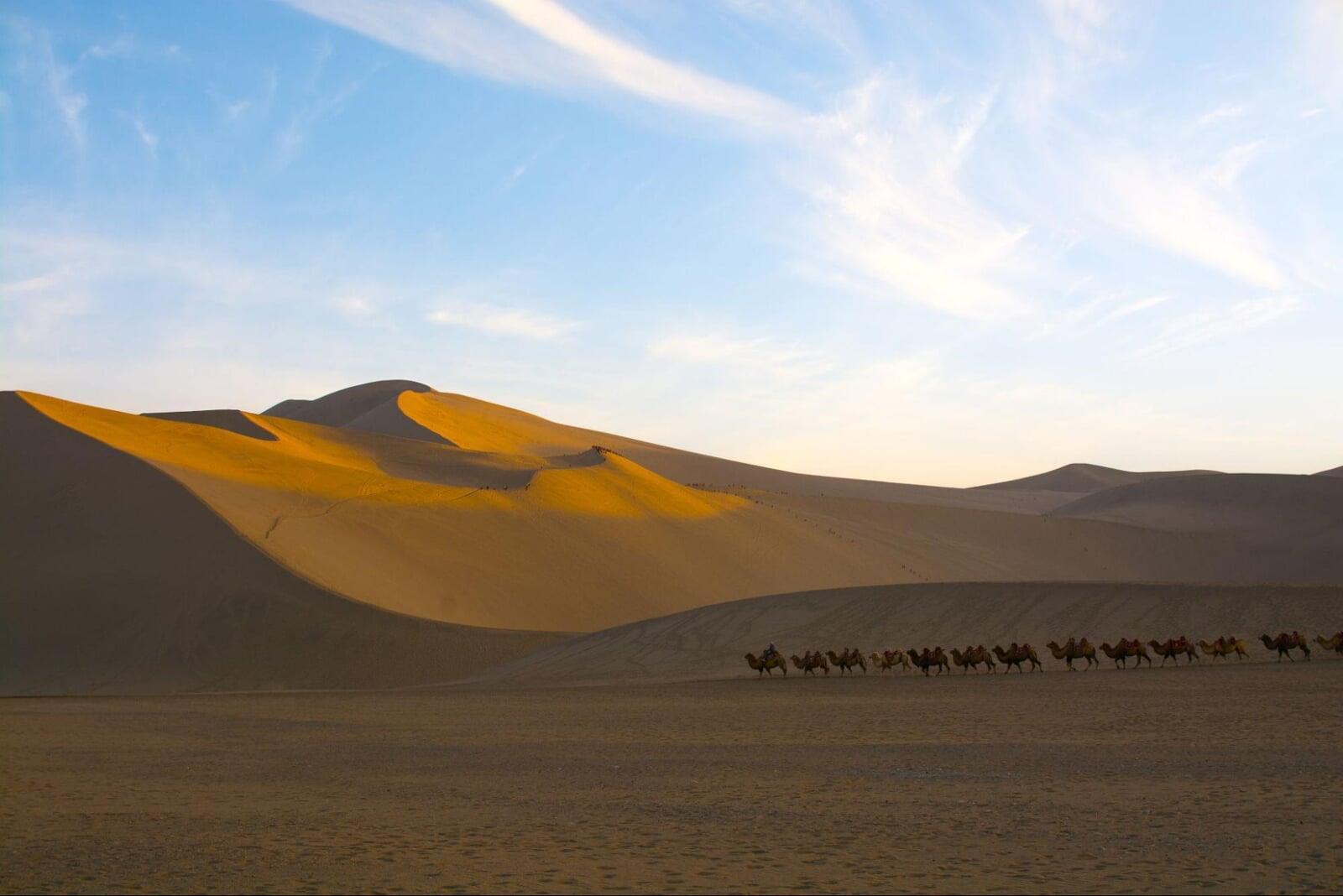
Gobi Desert Caravan Route with Milky Way

Camel caravan crossing sand dunes on a Gobi Desert caravan route, a scenic highlight of adventure trips in Mongolia

The Hook: Navigating the Deep Night

Caravans had to cross the Gobi Desert with strategy. Navigating during the day is easy; you have the sun to guide you, but the heat is a challenge, and the pace is slow. This is why the old traders moved early in the morning while it was cool, rested at midday, and resumed in the late afternoon. They pushed deep into the night when the speed was faster, and they could cover more distance. Both the traders and the animals liked the pace of a night trip. Because of the dry climate, the sky is always clear, and navigating by the stars is easy.

This rhythm of travel still defines modern night trips, where the desert reveals its most comfortable and efficient path after sunset.

The Constant: The Golden Peg
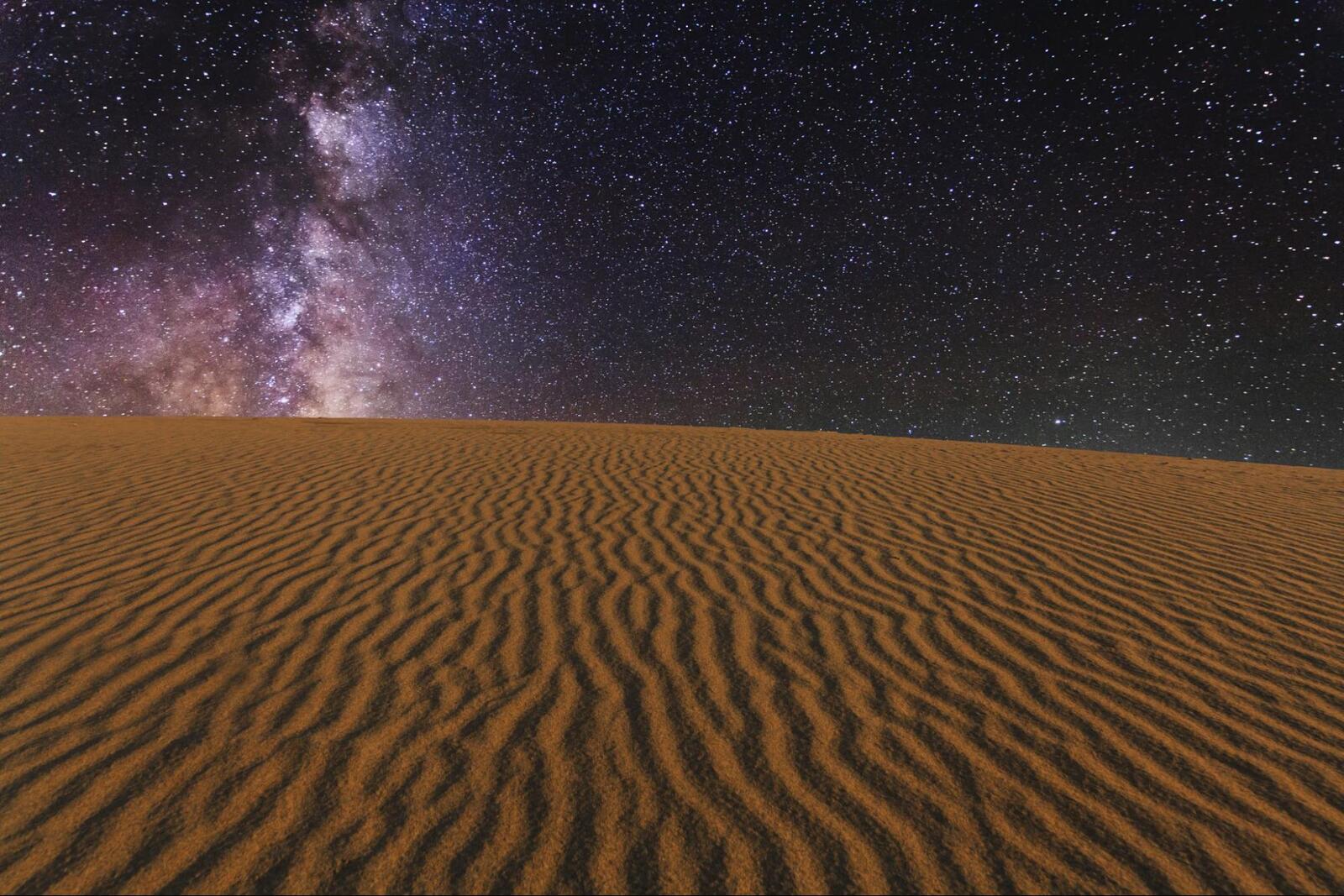
Milky Way over rippled sand dunes in the Gobi Desert, illustrating ancient caravan navigation under the night sky

At night, the caravan leaders didn't stop; they looked up. The sky is a reliable map. The easy star is Altan Gadas, the North Star. To the nomads, this is the Golden Peg. They believed the sky was a giant tent, and this star was the peg holding the center pole in place. As long as the caravan could see the Golden Peg, they had a clear sense of direction. On a professional expedition, we still use these ancient markers to find our way through the silence of the dunes, something you can still experience on a Gobi Desert tour Mongolia.

The Comfort: Why the Night Hits Different

There is a specific kind of silence that only happens in the Gobi Desert after midnight. The camels settle down, the air turns crisp, and the Milky Way becomes so bright it casts a faint shadow on the sand. It’s the ultimate opportunity for stargazing and one of the most unforgettable things to see in Mongolia. 
While the Golden Peg stays still, other stars act as the caravan's clock. The Seven Gods (the Big Dipper) rotate around the peg, telling the traders exactly how many hours of cool night are left before the sun forces them to rest again. This moving clock is the most ancient show on earth.

The Camp: Survival Under the Stars

Camping under the stars, with a stove tripod, the real tripod of three rocks serving as the kitchen, traditional borts soup is the caravan experience. Borts is wind-cured, concentrated beef, a nomadic superfood, pounded into a fine powder so a single handful can sustain a traveler for days.

FAQ

The best season for the clearest skies in the Gobi Desert is autumn (September to October).

Nomads used the stars as their guide, especially the North Star (Altan Gadas), known as the Golden Peg. It helped them maintain direction throughout the journey, acting as a constant reference point in the vast, featureless desert.

The Gobi Desert has a dry climate with minimal clouds and almost no light pollution. This makes the Milky Way incredibly visible, often bright enough to cast shadows—making it one of the most unique things to see in Mongolia.

Yes, the Milky Way is clearly visible due to the lack of light pollution and dry air. On clear nights, it can appear bright enough to faintly illuminate the desert landscape. 

Yes, guided trips make it safe and accessible. With experienced guides, even first-time travelers can enjoy the desert at night and learn basic star navigation.