
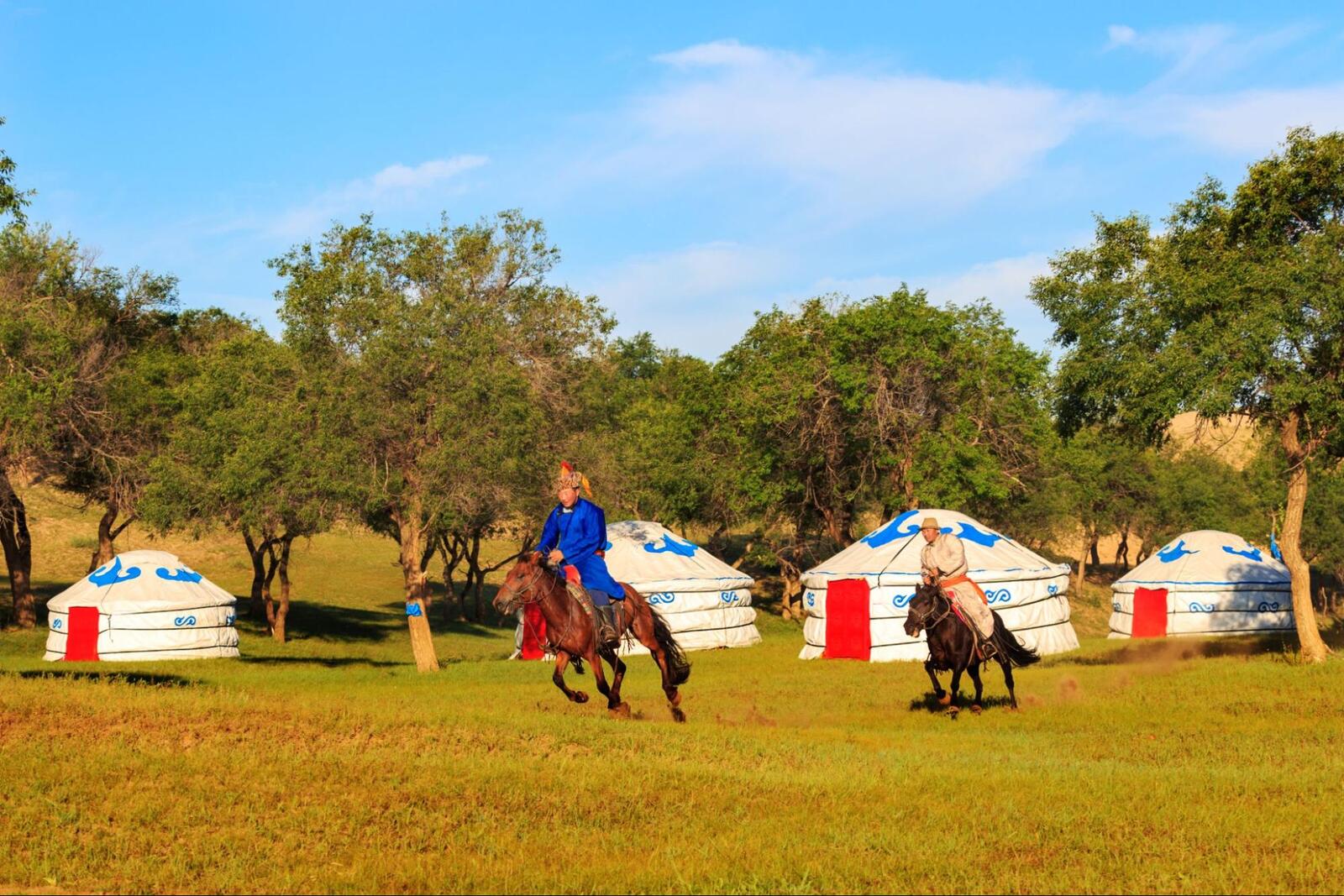
Is there a country where horses outnumber people? Yes. Mongolia. If horses outnumber people, do they shape the country? In Mongolia, they do. For centuries, horses have shaped how people moved, traded, herded, hunted, traveled, fought, celebrated, and survived. Mongolia’s culture and livelihood were born and raised on horseback.
So the natural question for many travelers is simple:
Can I ride in Mongolia if I am a beginner? Yes. But the answer needs one important understanding. A horse is not a bicycle, a motorcycle, or a rented vehicle. In some ways, it can feel easier because it has its own balance, instinct, and intelligence. But that also means you are not riding a machine. You are riding a living partner with its own mood, spirit, and judgment. All you need to begin is a normal balance, good guidance, and the right attitude.
Mongolia Is Horse Country, But Beginners Are Welcome
In Mongolia, horses are not oversized pets or weekend hobbies. They are working partners, companions, and transport. And those partners have their own intelligence, spirit, and attitude.
If you are a beginner, the ideal match is a calm and patient horse. A good horse quickly understands group movement. It can sense your pace, distance, group rhythm, and ride direction. It will often align itself with the group more naturally than a beginner expects. That is one reason horseback riding in Mongolia can be approachable for first-time riders. You are not doing everything alone.The horse is not passive. It is participating.
The guide’s role is also important. A good local guide knows which horse is suitable for which rider. Beginners do not need the fastest or most spirited horse. They need the right partner.
Do You Need Riding Experience?
If you already have riding experience, that is great. It means your riding muscles already know what to do. Your balance, legs, hands, and seat will remember more than you think.
It may also mean you prefer a more spirited ride. Some horses are more energetic, more “gallop happy,” and will keep asking whether it is time to jog or run.
For beginners, the best rides are usually shorter, slower, and guided closely. A one-hour ride, a half-day ride, or an easy day ride can be enough to feel the steppe from horseback without pressure.
The goal is to let your muscles adjust and enjoy the ride.
What Makes Horseback Riding in Mongolia Different
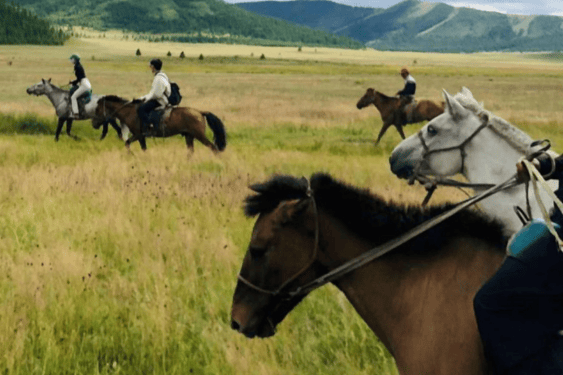
The first difference is space. There are no property borders in the countryside, no fences dividing every field, no small loop designed only for tourists. Space means passing mountains, crossing rivers, and moving toward a destination instead of circling within boundaries.
The second difference is the horses.
Mongolian horses are smaller than many Western riding horses, but they are strong, tough, and adapted to the land. They are used to weather, distance, uneven terrain, and life outdoors. They know how to take care of themselves.
You do not need to feed them in the way stable horses are fed in many countries. They graze, move, endure weather, and live as part of the landscape. That is how they became partners in building an empire, not pets kept apart from the work of life. The third difference is rhythm. In many countries, horse riding is taught as a controlled sport or guided leisure activity. In Mongolia, riding is connected to movement, herding, and daily life.
After the first day, the horses often understand the purpose of the journey. They understand the group, the destination, the daily distance, the pace, and the travel arrangement. They begin to align with the route in a way that feels almost automatic. That is what makes riding in Mongolia different.
Basic Skills and Safety for Beginners
The first safety rule begins before you even mount. When you approach a horse, make sure the horse sees you. Do not sneak behind it or surprise it. If a horse is spooked, it may buck to escape or kick as a defensive reflex. Use your steps and your voice. Let the horse hear you coming. Approach from a direction where it can see and understand you. Mounting is usually done from the left side. It is interesting that for centuries, many riding cultures have mounted from the left. Some say it may be related to swords once hanging on the left side. Maybe. No one knows the full answer.
From my own observation, most people are right-handed. The stronger dominant hand can better grab the saddle, pull, and help lift the body. It is also interesting that many people mount bicycles and motorcycles from the left side, too. Maybe it is habit, history, and muscle memory carried across centuries.
Avoiding surprise continues while you are riding.
A common example: you want a snack while riding. You reach into your pocket and pull out trail mix or a candy bar. The wrapper makes an unusual sound. The horse’s ears begin moving back and forth, trying to locate it. The sound is right behind its neck, but it cannot see what is happening. That can make the horse uneasy.
Another example: rain is coming. Without thinking, you reach into the saddlebag and pull out a bright raincoat. It makes a strange rustling sound. From the corner of its eye, the horse suddenly sees something unfamiliar rising from its back. Instantly, it may try to escape. The correct thing is simple. Get off the horse. Take out the raincoat while it is still folded and small. Move away a little so the horse can see you and understand what you are doing. Put on the coat. Let the horse see and hear it. Then come back and mount again. It is similar to commuting. You do not make sudden, jerky moves while someone else is trying to move with you. With horses, calm and predictable behavior matters.
What to Wear and Prepare
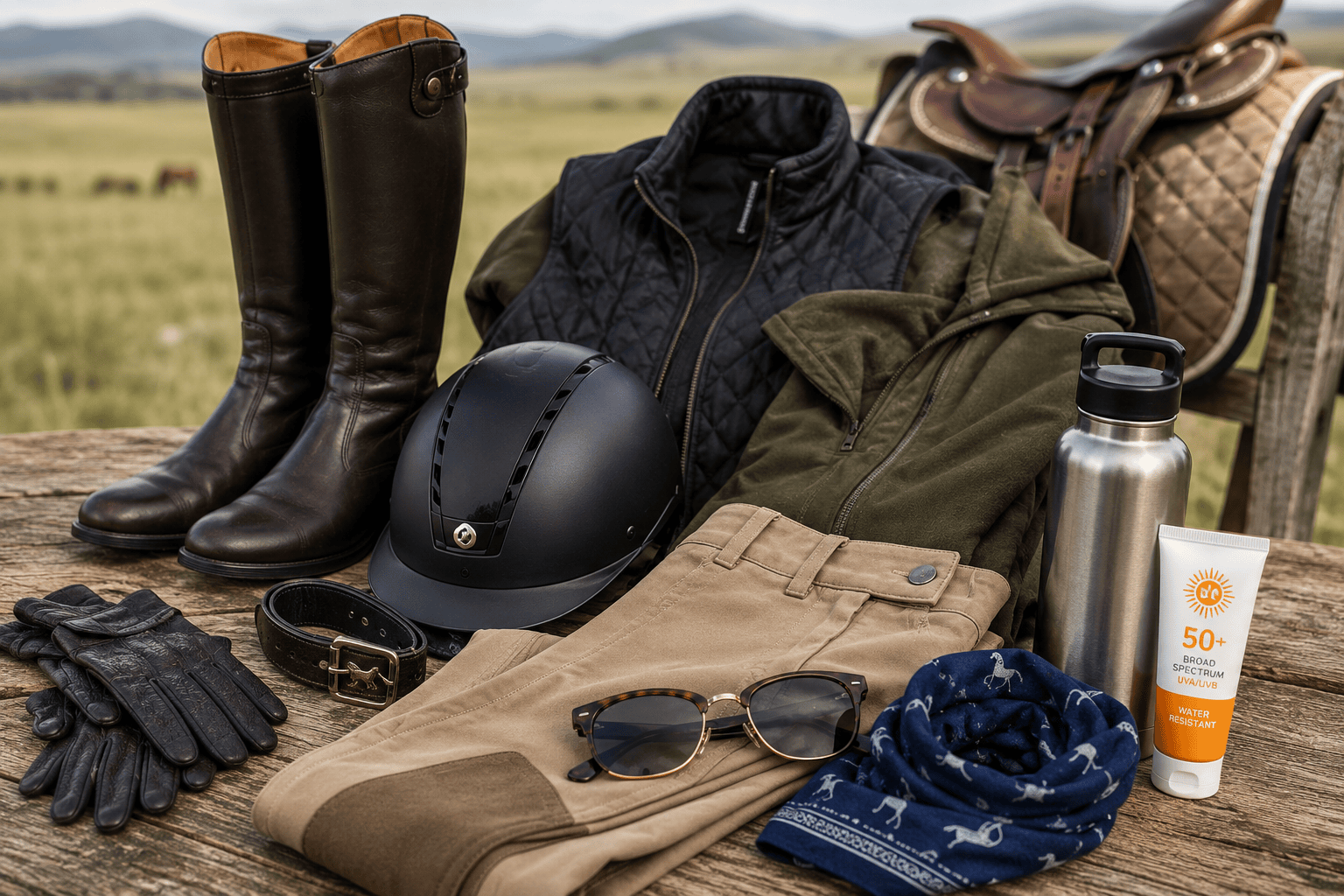
Long riding boots or half chaps are useful because your calves are in constant contact with the stirrup leathers. Chaps add padding and protection. Since you are wearing boots or half chaps, pants are the logical choice.Pants are not only about appearance. They have a function. They protect the inner thigh from rubbing against the saddle and create a comfortable layer between your legs, boots, and tack. For the upper body, wear whatever feels comfortable for the weather.
Layers are useful because Mongolia can change quickly. Mornings and evenings can be cool, while midday can be warm. Wind is common.
A helmet is recommended. It is not only for safety. It also feels comfortable once you are used to it, and it looks right for riding. The goal is simple. Protect your body so you can continue to enjoy the ride.
Choosing the Right Mongolia Horseback Tour
When you are a novice, shorter trips are easier.A short ride allows you to understand the horse, the saddle, the movement, and your own comfort level without committing to many long hours. For many beginners, one hour or half a day is a good first step.
If you would like to join a longer horse tour in Mongolia, preparation helps. Visit a local barn once or twice before your trip. Let your body remember what riding feels like. Break in the riding muscles before Mongolia asks them to work for several days. For longer trips, skill is not only about control. It is also about staying comfortable in the saddle for hours.
What to Expect from the Horses
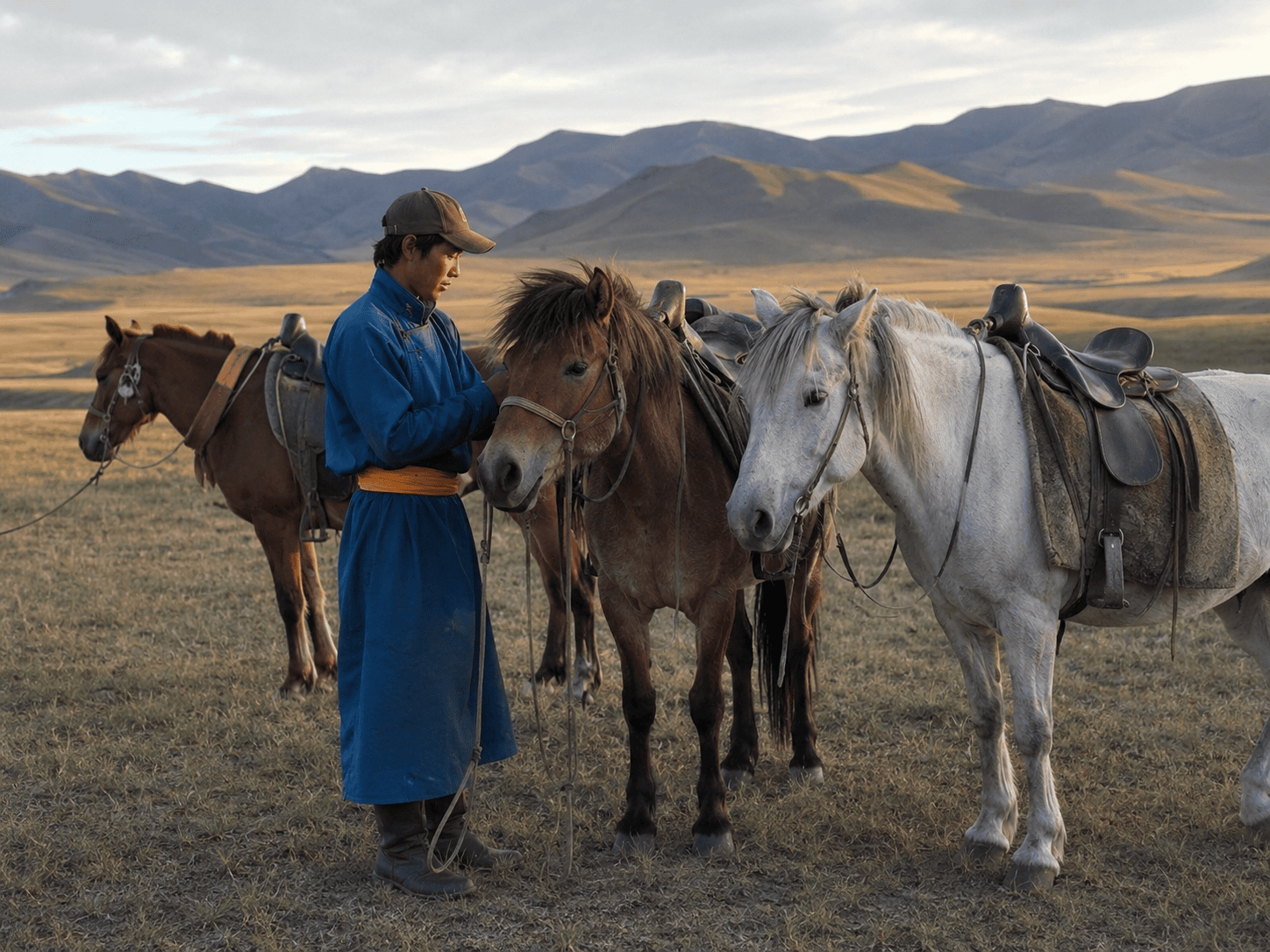
Mongolian horses are small, but they are not weak.
They are compact, strong, alert, and independent. They live outdoors through cold winters, hot summers, wind, rain, and long distances. Their size can surprise travelers at first, but their endurance is part of what made Mongolia a horse country. They are also intelligent.
They notice who is riding them. They notice group direction. They notice confidence, hesitation, sound, movement, and mood. A beginner may think only the rider is learning the horse, but the horse is also reading the rider.
Some horses are calm and patient. Some are energetic and better suited for experienced riders. Some want to stay close to the group. Some want to move faster. This is why the guide’s horse selection matters.
Do not choose a horse by appearance. For a beginner, the best horse is not the prettiest or fastest. It is the one that is steady, patient, and suitable for your level. Once you relax into the rhythm, the land feels different from horseback. You begin to understand why Mongolia and horses cannot be separated.