
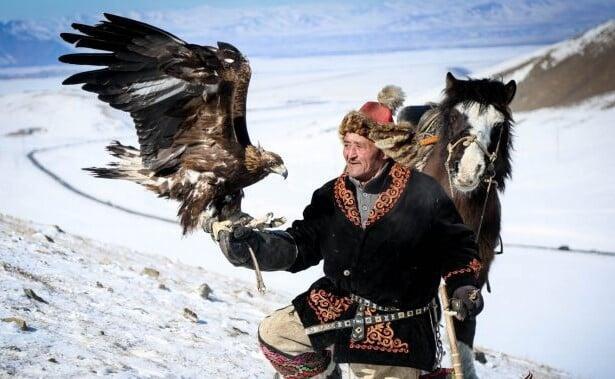
In the Altai Mountains of western Mongolia, winter temperatures routinely hit -40°F, and snowpack alters the terrain. In this environment, pursuing wild game on foot operates at a severe caloric deficit. To solve the problem of winter survival, Kazakh nomads engineered a highly efficient, airborne tracking and retrieval system.
The Biology of the Weapon: Reverse Sexual Dimorphism
In the Altai Mountains of western Mongolia, winter temperatures routinely hit -40°F, and snowpack alters the terrain. In this environment, pursuing wild game on foot operates at a severe caloric deficit. To solve the problem of winter survival, Kazakh nomads engineered a highly efficient, airborne tracking and retrieval system.
While the global practice of falconryis widespread, falconry in Mongolia operates on an entirely different scale of predatory physics. By integrating the Golden Eagle's optic and kinetic capabilities with human mobility on horseback, herders created a biological alliance capable of securing calorie-dense meat and insulating winter fur. Today, for travelers undertaking high-end adventure tours in the region, understanding the mechanics of this partnership is the key to comprehending Altai nomadic life.
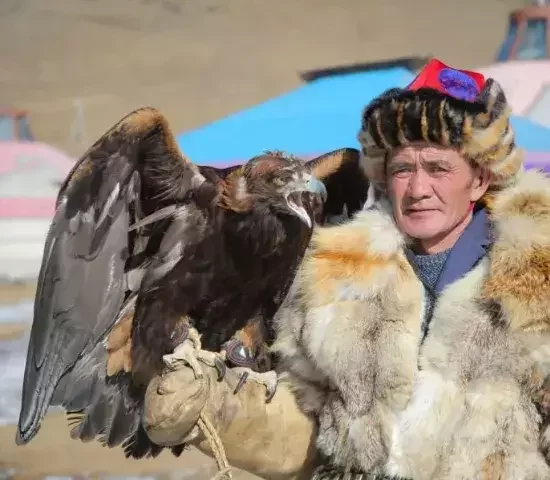
An eagle falconer (known locally as a Berkutchi) does not select their avian partner at random. They work exclusively with female Golden Eagles. This is due to a biological trait known as reverse sexual dimorphism, in which females of the species grow significantly larger and heavier than males. A mature female Golden Eagle can weigh up to 15 pounds and possess a wingspan exceeding six feet. In the high-altitude environment of the Altai, this sheer mass is a tactical requirement. The extra weight provides the aerodynamic stability needed to hunt in 40-mph crosswinds and generates the massive force required to safely strike and hold large prey, such as red foxes, without sustaining injury.
The Psychology of the Partnership: Weight and Will
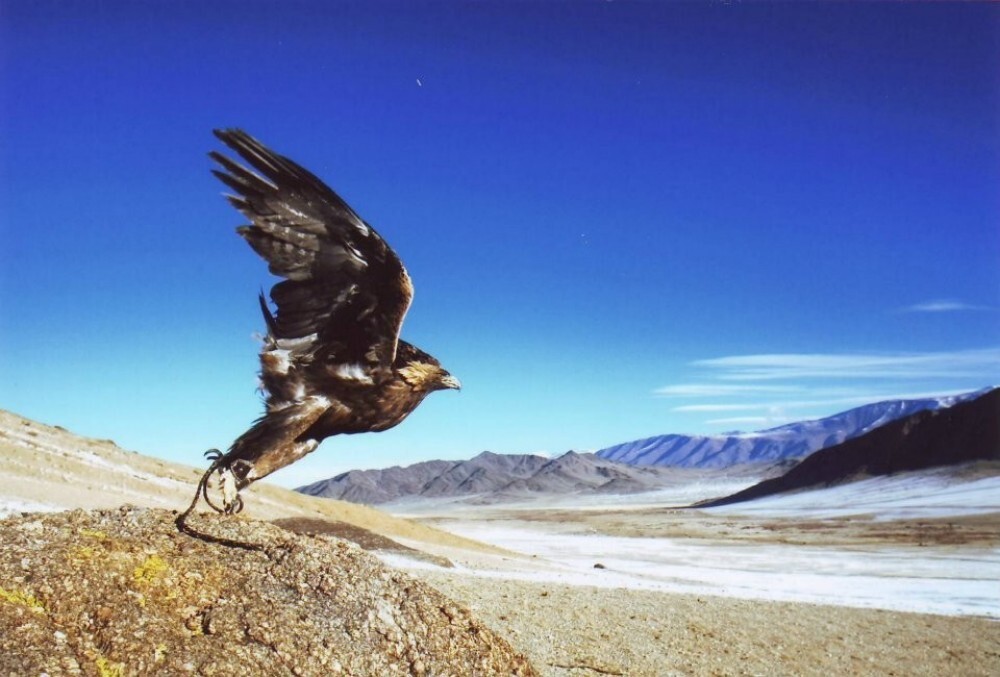
Eagle hunting developed in western Mongolia, especially in the rugged Altai Mountains. The region’s open steppes, deep valleys, and high ridges create ideal conditions for birds like the Golden Eagle. From high altitudes, eagles can easily spot prey, making hunting highly effective. For nomadic hunters on horseback, trained eagles made it easier to hunt across vast, challenging terrain. The harsh climate shaped this practice, with long, freezing winters and scarce food making hunting essential for survival. The rugged terrain made chasing animals difficult, so hunters relied on the eagle’s speed and strength.
The Tactical Gear: Managing 400 PSI
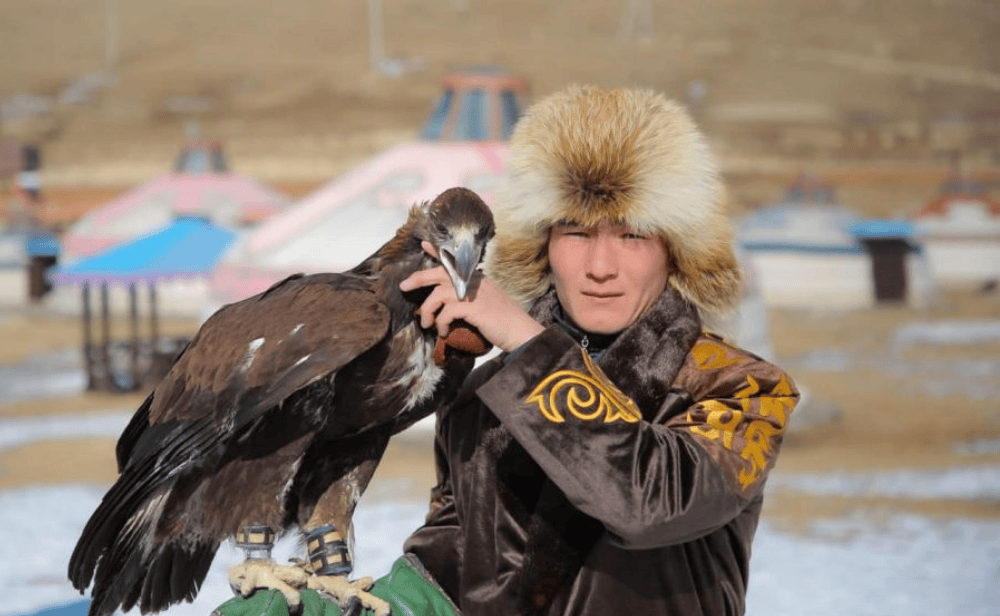
Working with an apex predator requires equipment designed for force mitigation and sensory control.
A custom-fitted leather hood placed over the eagle’s head. This acts as a sensory-deprivation tool. By eliminating visual stimuli, the hood instantly lowers the bird's heart rate, conserving her energy and preventing her from launching at non-target movements during long rides.
A heavily reinforced leather sleeve. A Golden Eagle's talons can exert roughly 400 pounds of pressure per square inch (PSI). The gauntlet protects the hunter’s arm from being crushed when the bird lands.
A wooden, Y-shaped crutch attached to the front of the saddle. Supporting a 15-pound bird on an outstretched forearm while navigating a horse across rocky, snow-covered terrain causes rapid muscle fatigue. The hunter rests their arm on the Baldyr to maintain physical endurance over a multi-hour expedition.
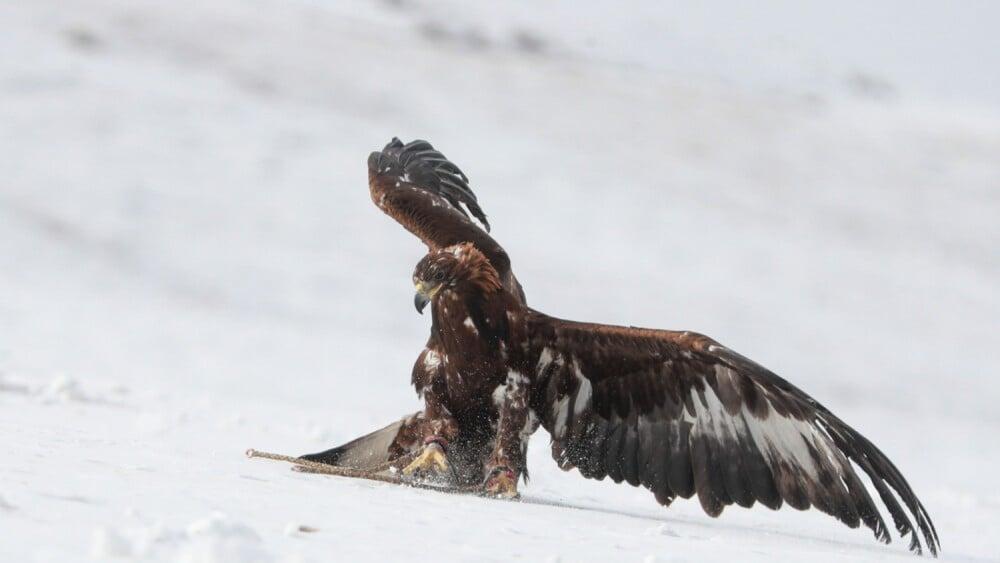
The hunt itself is a calculation of wind, elevation, and terrain. The hunter rides to high ridges, analyzing the snowpack below for fresh tracks.
When a target is spotted, the hunter unhoods the bird and launches her directly into the wind. This headwind generates immediate aerodynamic lift under her wings, allowing her to gain altitude quickly. Once she locks onto the target, she folds her wings into a teardrop shape, executing a stoop (dive) that can exceed 150 mph.
The Golden Eagle is an evolutionary "warrior" with a psychological profile that often disregards its opponent's size. In the wild, they are known to strike predators significantly larger than themselves, including wolves and even snow leopards. This innate fearlessness is a tactical double-edged sword. While it makes the eagle a formidable hunter, it also puts the bird at risk of fatal combat.
The eagle falconer acts as the tactical governor of this aggression. The Berkutchi’s primary role during the strike is to monitor the bird’s intent and intervene if she targets high-risk, large-bodied predators. By managing these engagements, the hunter protects his partner from the consequences of her own ferocity, ensuring her longevity by closing the hunt with a controlled reward rather than a life-threatening struggle.
The 7-Year Cycle: An Ethical Release
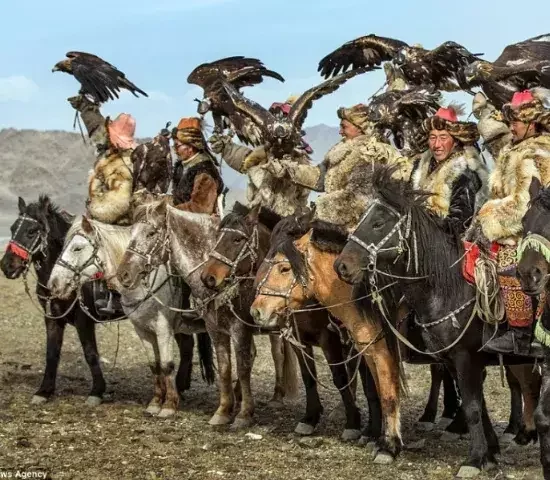
The most critical part of this system is its built-in ecological preservation. A Golden Eagle is not kept for its entire lifespan. In Kazakh culture, the eagle is not treated as a possession. Instead, it forms a temporary, mutually beneficial bond with the hunter. After seven to nine years of hunting together, the eagle is released. The Berkutchi rides deep into a remote mountain valley. He offers the eagle a final meal before setting her free. She is released back into the wild at her physical peak. With a high-protein diet and daily training, she is strong and skilled. She returns not as a vulnerable juvenile but as a master huntress. This greatly improves her chances of survival in the wild. She is then able to claim territory and reproduce successfully. Her return helps maintain a strong and stable eagle population in the Altai region.
Modern Reality and the Eagle Festival
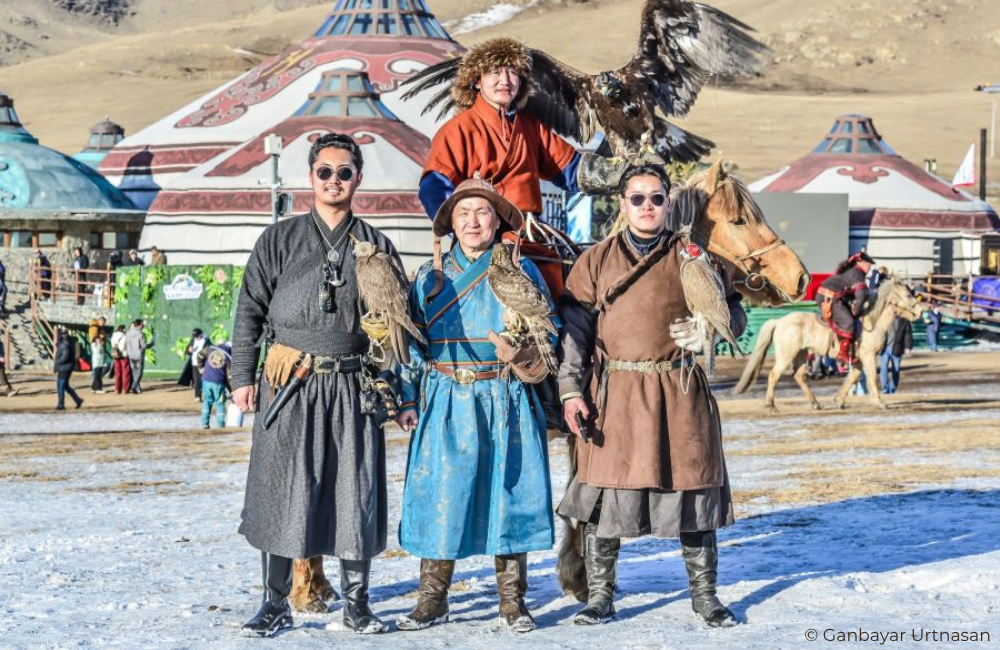
Today, the mechanics of the hunt are shifting. Climate variations in western Mongolia have led to reduced snow cover, removing the white backdrop hunters rely on to track and spot winter prey. Despite these changes, the tradition remains a strong cultural anchor in Bayan-Olgii province. This is most clearly seen during the annual Golden Eagle Festival each October, where hunters gather to test their eagles’ speed, agility, and responsiveness. While the festival offers visitors a concentrated glimpse of the practice, the true high-stakes hunts occur in the harsh winter months (November to February), revealing a raw and unscripted reality for those who endure the extreme cold.
Conclusion: A Living System of Precision and Respect
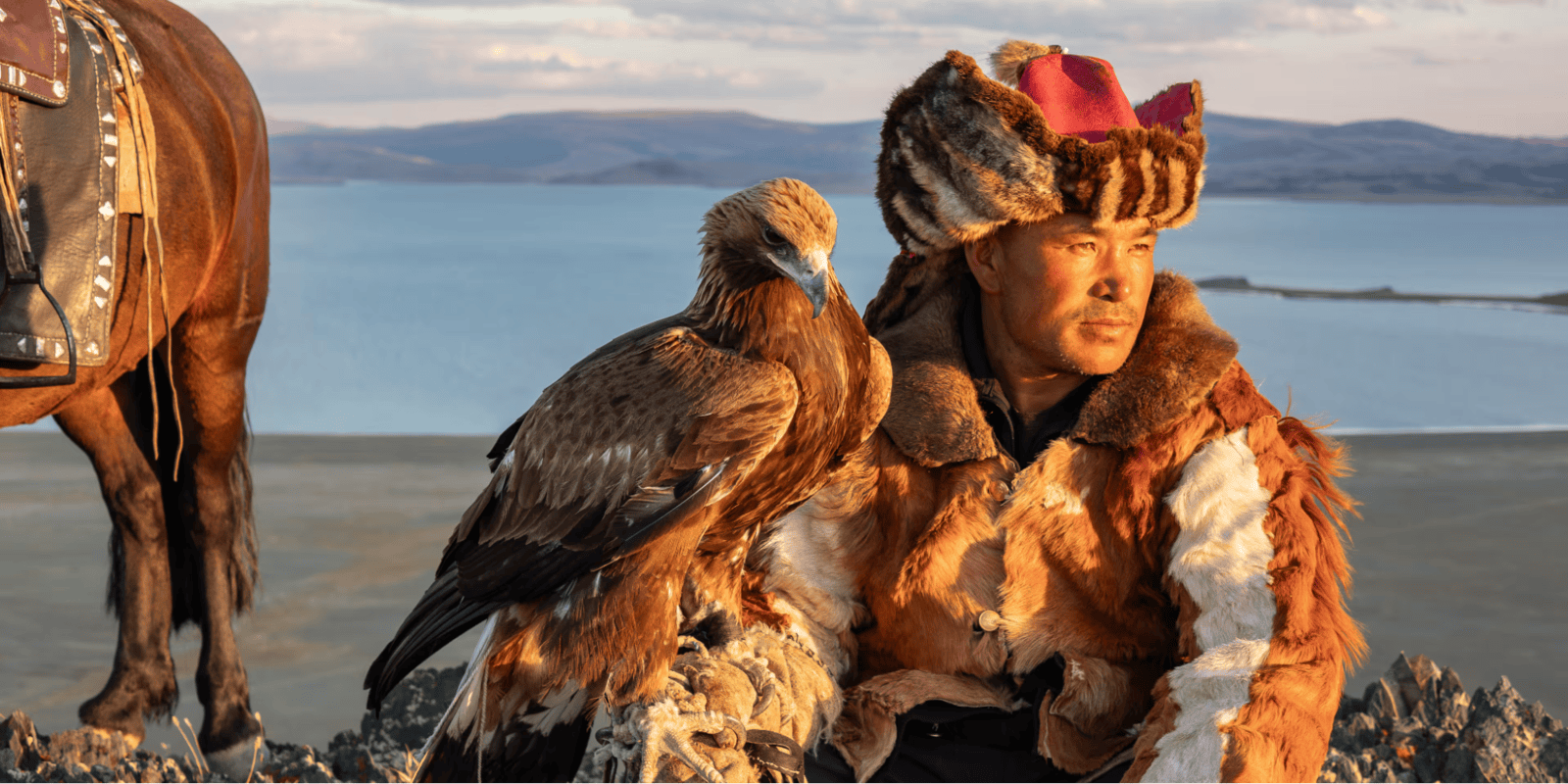
Eagle hunting in the Altai is far more than a cultural spectacle—it is a refined system built on biology, physics, and mutual trust. Every element, from the selection of a female Golden Eagle to the calculated mechanics of the strike, reflects generations of empirical knowledge shaped by one of the harshest environments on Earth.
What makes this practice truly remarkable is not just its efficiency, but its balance. The relationship between the Berkutchi and the eagle is not one of control, but of calibrated partnership—where instinct meets discipline, and power is guided rather than dominated. Even the final act of release reinforces this philosophy, ensuring that the cycle remains sustainable and the wild population continues to thrive.
In a rapidly modernizing world, the eagle hunters of western Mongolia preserve more than tradition—they maintain a living blueprint of how humans can coexist with nature through respect, restraint, and deep understanding. For those who witness it firsthand, this alliance is not just a hunt, but a powerful lesson in harmony between man, animal, and environment.