
The Gobi’s history is a dramatic three-part story: it began as a warm tropical ocean floor 400 million years ago, transitioned into a lush, swampy dinosaur kingdom, and finally became the high-altitude desert we see today.
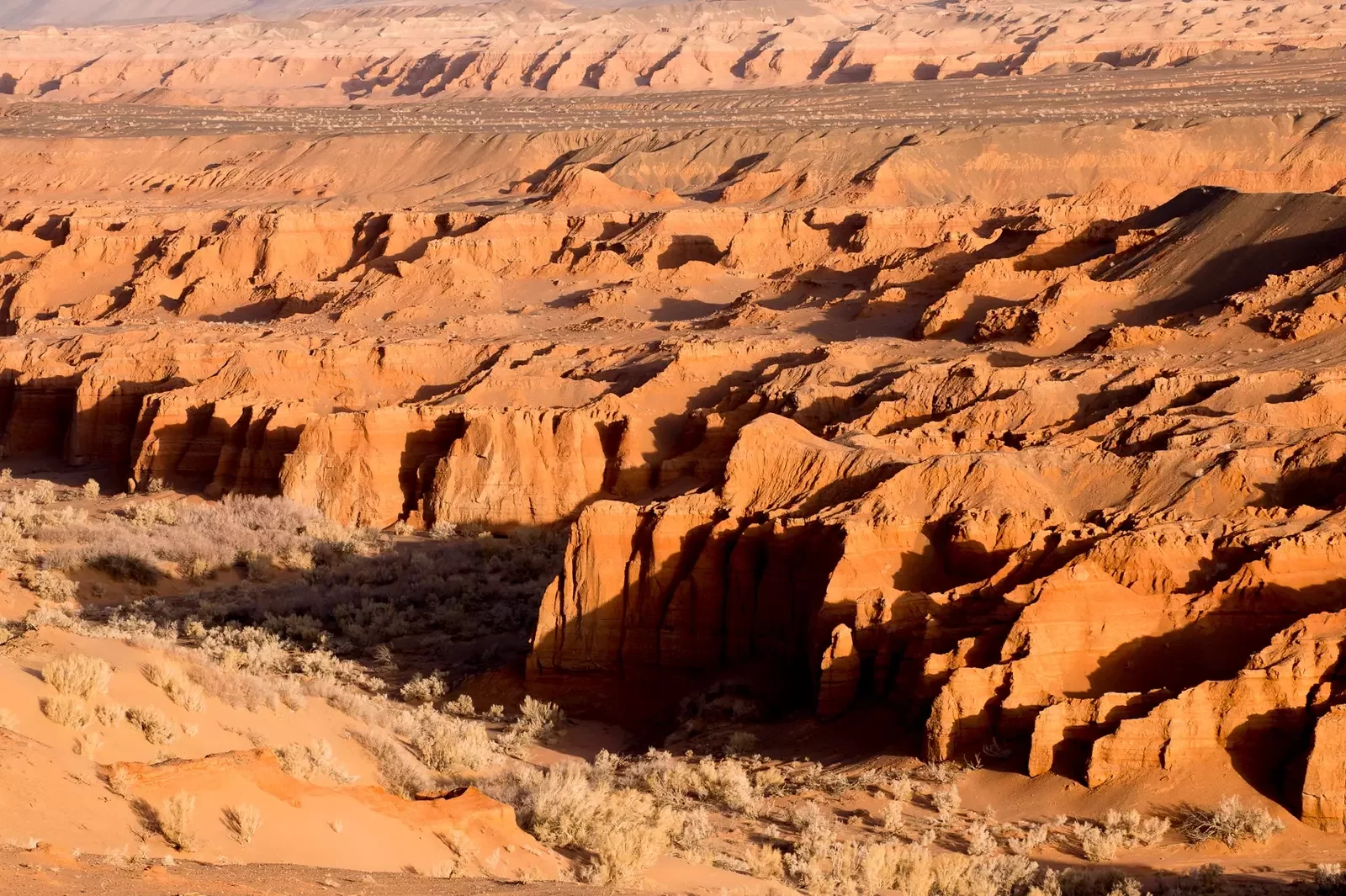
Over millions of years, the ancient ocean disappeared and was replaced by massive rivers and thick forests, the perfect kingdom of dinosaurs. When these animals died, they were quickly buried by sand and mud, which kept their skeletons perfectly preserved. Today, the wind and rain have peeled back those layers of earth, and you can now walk through red cliffs to see 80-million-year-old history sitting right on the surface.
The Gobi is not just a desert; it is a landscape of ancient marine shells, fossilised coral, and dinosaur beds. It is a prehistoric world that has finally been uncovered, and you see every chapter of this story firsthand.
Why Mongolia Is Famous for Fossil Discoveries
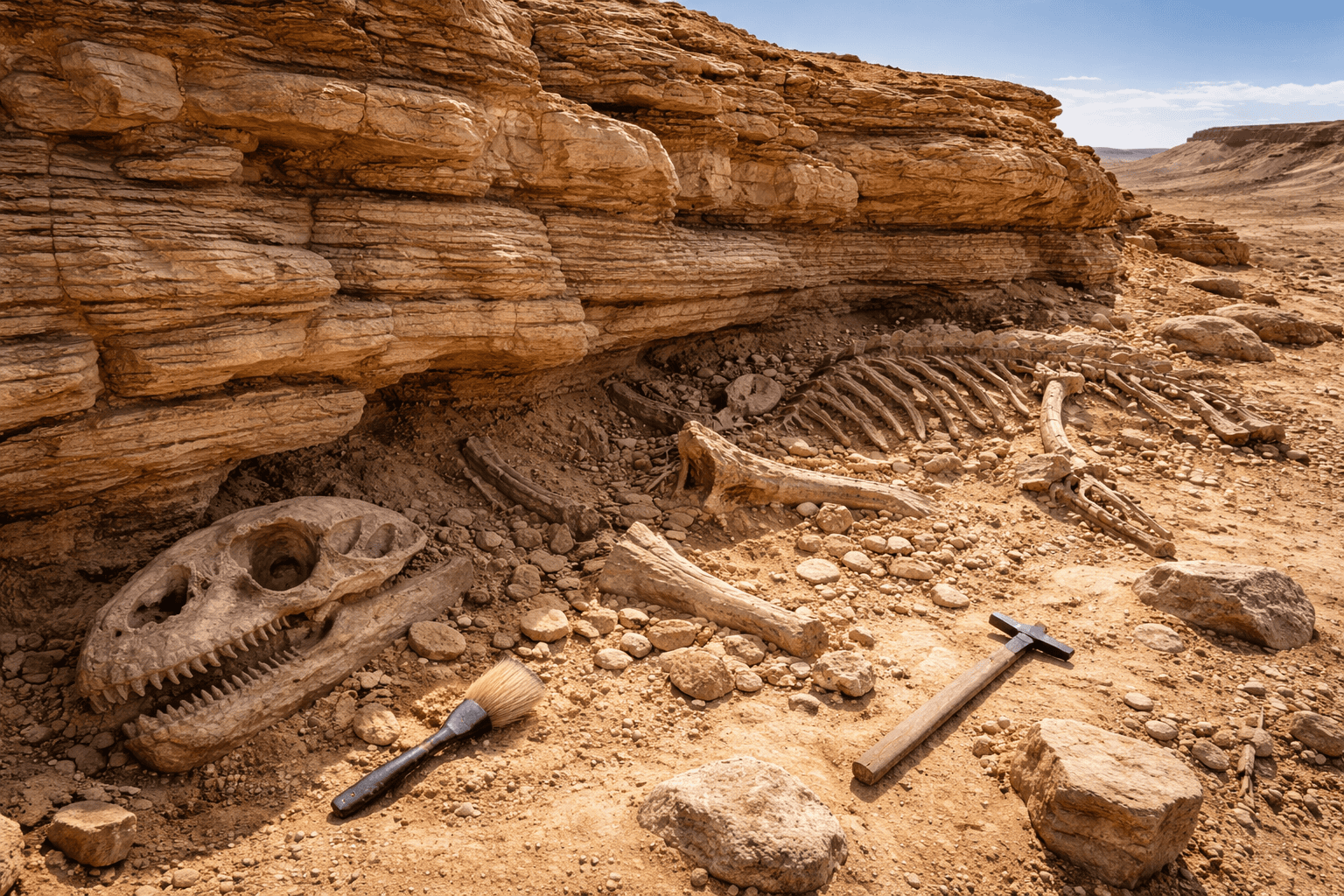
Mongolia’s paleontological reputation is driven by its unique geology and arid climate. The Gobi Desert preserves fossils with remarkable clarity and abundance. Dry conditions limit decay and protect ancient remains. Ongoing natural erosion gradually exposes bones and eggs. This makes the region one of the most important fossil landscapes in the world.
The Gobi is often called a "natural vault." During the era of the dinosaur kingdom, the region was filled with massive rivers and shifting sand dunes. When an animal died, or was caught in a sudden sandstorm (the prehistoric equivalent of a massive avalanche), it was buried almost instantly.
This instant burial acted like a snapshot in time. It prevented predators from scattering the bones and stopped oxygen from decaying the remains. This is why explorers today often find complete skeletons, some still in their final poses—such as the famous "Fighting Dinosaurs," who remained locked in combat for 80 million years after being buried by a collapsing dune.
The world’s attention first turned to Mongolia in the 1920s during the expeditions of Roy Chapman Andrews. Often described as the real Indiana Jones, Andrews led a seminal 1923 expedition that fundamentally changed science. At the Flaming Cliffs, his team discovered the world's first fossilised dinosaur eggs. Before this find, it was not known that dinosaurs were reptilian and laid eggs. This discovery established the Gobi as one of the most significant paleontological sites on the planet, a status it still holds today.
Top Fossil Sites You Can Visit
Several protected fossil sites are accessible through specialised tour companies. These tours combine education, desert exploration, and cultural experiences.
Bayanzag (Flaming Cliffs)
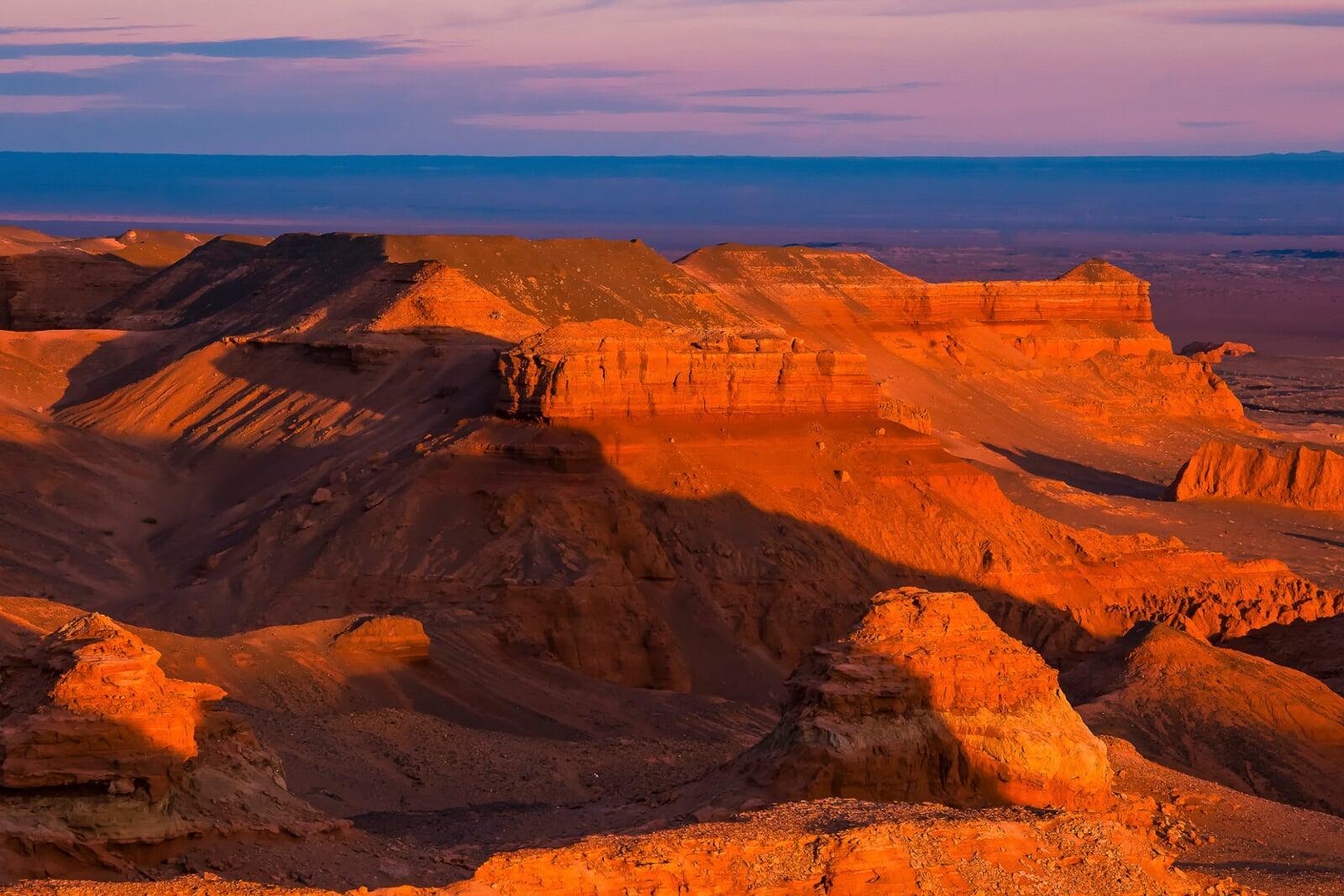
This is the most well-known dinosaur fossils site in Mongolia and gained global fame as the location where the real Indiana Jones discovered the first dinosaur eggs.
What Causes the "Flaming" Effect?
The cliffs earn their name from their deep, iron-rich sandstone composition. The high iron oxide content in the rock reacts to the low-angle light of the sun, causing the escarpment to erupt into a brilliant, fiery orange and red glow. To see the cliffs "flame" in their full intensity, they are best viewed at sunrise or sunset, when the shadows are long, and the colours are most vivid.
What you’ll see:
Towering Red Sandstone Cliffs: Dramatic, wind-carved formations that look like a burning city on the horizon.
The Site of "Indiana Jones" Discovery: Walk the exact ridges where Andrews and his team made their 1923 breakthrough.
Active Excavation Areas: See the gullies where seasonal erosion continues to reveal fossil fragments.
Sweeping Desert Scenery: Panoramic views of the South Gobi basin extending toward the horizon.
Tugrugiin Shiree
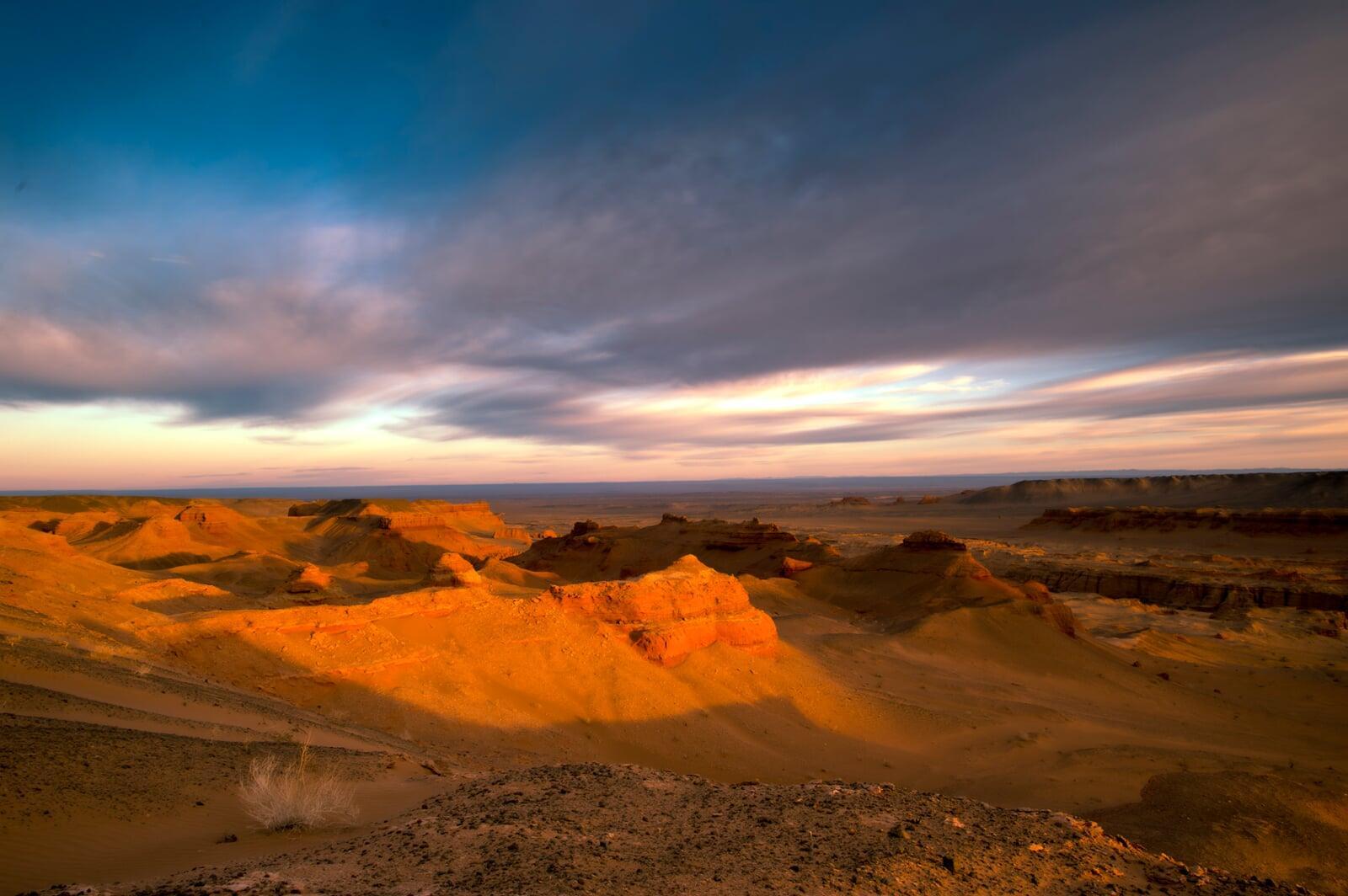
While the Flaming Cliffs are famous for their red sandstone, Tugrugiin Shiree is a white sandstone escarpment, renowned for some dramatic and rare fossil discoveries.
The legendary find here occurred in 1971, the "Fighting Dinosaurs." This specimen captures a Velociraptor and a Protocerptors locked in a deadly struggle. Their combat was frozen in time when a massive sand dune collapsed, burying them instantly and preserving their final moments for 80 million years.
What you’ll experience:
Guided explanation of key discoveries: Learn how the "Fighting Dinosaurs" and other major specimens were uncovered from the white cliffs.
Remote desert environment: Experience the absolute silence and vastness of Gobi, far from the more travelled routes.
Historical excavation locations: Walk through the specific gullies where joint paleontological expeditions made history.
Young Dinosaurs: In addition to the famous adult specimens, this site is a known nesting ground where fossilised dinosaur hatchlings have been found in their eggs.
Nemegt Basin (The Dragon’s Tomb)
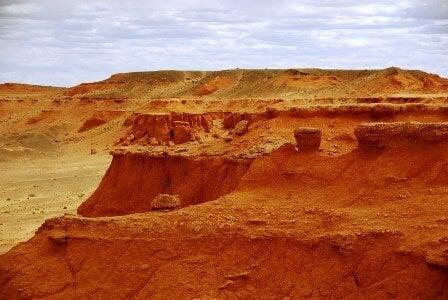
Deep in the remote reaches of the Gobi lies the Nemegt Basin, a place scientists have dubbed the "Dragon’s Tomb." While other sites are famous for small, agile predators, the Nemegt is known for the giants of the dinosaur kingdom. This massive valley has produced the largest carnivorous dinosaur skeletons found in Asia, most notably the Tarbosaurus the fearsome Asian cousin of the T-Rex. It is also the home of the Deinocheirus, a bizarre, ostrich-like giant with 8-foot-long arms and massive claws that baffled scientists for half a century.
Types of Dinosaurs Discovered
Below is a simplified overview of the species that define Mongolia’s prehistoric legacy.
- Velociraptor – Carnivore; A small, feathered, and agile predator, famously found in the “Fighting Dinosaurs” specimen.
- Tarbosaurus – Large Carnivore; The “Asian T-Rex”—a massive predator with a crushing bite.
- Protoceratops – Herbivore; A sheep-sized dinosaur with a parrot-like beak and a protective bony frill.
- Oviraptor – Omnivore; Originally called the Egg Thief, we now know it was a devoted parent that brooded its own nests.
Protecting the Dragon’s Tomb: The Laws of the Desert
Because the Gobi is such a prolific "natural vault," the Mongolian government has established strict preservation laws to ensure these stories aren't lost to history.
A Century of Protection: Since 1924, all dinosaur fossils in Mongolia have been considered a national treasure. This means that every bone, tooth, and egg fragment is protected.
Take Only Photos Rule: Whether it is a massive skull or a tiny fragment of shell, moving a fossil destroys its scientific context, the clues that tell palaeontologists how the animal lived and died.
Global Repatriation Success: Mongolia is world-renowned for its efforts to bring smuggled fossils back home. Most recently, in early 2026, a major collection of fossils, including a rare Tarbosaurus skeleton, was successfully repatriated from France to Ulaanbaatar.
What a Typical Fossil Tour Looks Like
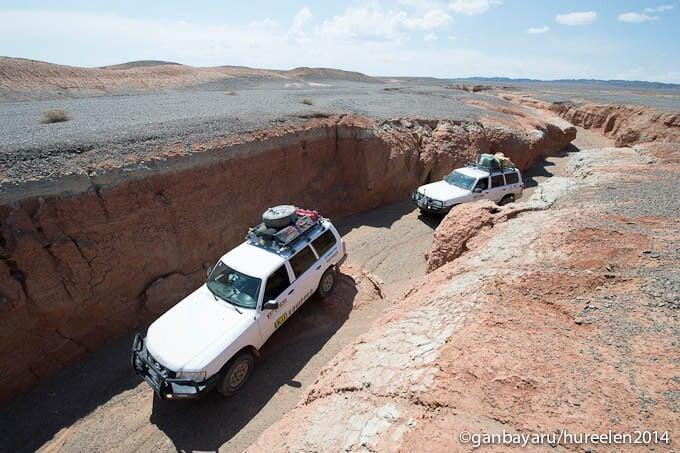
A dinosaur-focused expedition usually runs between May and September, when Gobi weather is stable. These are true 4x4 adventures that take you deep into the "natural vault."
What to Expect on the Ground:
Expert Field Guidance: Travel with knowledgeable guides trained in paleontological history who help you identify and understand fossil-rich terrain.
Museum Visits: Explore local museums to view articulated skeletons discovered in the same valleys you visit.
Authentic Living: Stay in traditional ger camps or camp under the Milky Way, with local meals and interactions with nomadic families.
Travel Logistics and On-Ground Experience
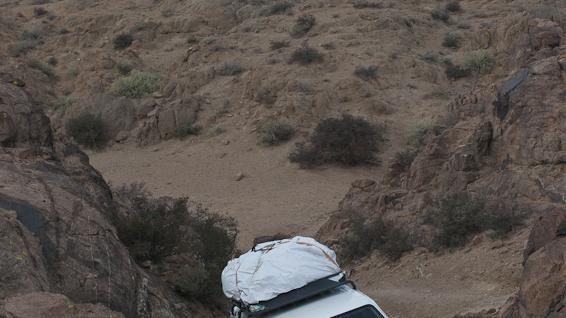
Navigating the Gobi requires precise planning due to the limited infrastructure between fossil sites. Because these locations are remote, we handle the technical side of the expedition, including fuel management, desert navigation, and securing research-area permits, so you can focus on the fieldwork and the landscape.
The Rhythm of the Road
Gobi expeditions involve significant time on the move. You can expect:
Overland Travel: Most days involve several hours of driving across gravel plains and dry riverbeds in 4x4 vehicles. These are not standard roads; we navigate open terrain where landmarks are minimal.
Daily Schedule: While our route is planned, we keep the schedule flexible to account for weather changes or road conditions. This ensures you have enough time at each site for photography and exploration without being rushed.
Guided Field Walks: Once we arrive at a fossil zone, the focus shifts to trekking. You will spend your afternoons on guided walks through canyons and gullies, learning how to identify different rock layers and prehistoric fragments.
Accommodation and Food
Even in remote basins, we prioritise reliable setups for rest and meals.
Ger Camps: You will stay in traditional Mongolian gers. These are felt-lined dwellings that stay cool in the heat and warm at night, equipped with beds and a central stove.
Eco-Lodges and Tents: In areas without permanent camps, we use eco-lodges or high-quality tents. These provide a base for a warm meal and a place to recharge your gear.
Local Interaction: Our routes pass through active nomadic herding lands. You will have the opportunity to meet local families and see how they live in the same environment where these fossils are found.
Other Things to See in Mongolia
While fossil tours are a major highlight, we recommend including these destinations to see the full diversity of the country’s geography and heritage.
Popular Travel Additions
Khongoryn Els (The Singing Dunes): These are some of Mongolia’s largest sand dunes, stretching over 180 km and rising to 300 meters. They are called the "Singing Dunes" because of the deep, harmonic hum the sand makes as it shifts in the wind.
Yolyn Am (The Ice Gorge)Located in the Gobi Gurvan Saikhan National Park, this deep, narrow canyon is famous for the thick ice field that remains on its floor well into the summer months. It is an ideal spot for hiking and spotting bearded vultures (the "Yol").
Terelj National Park: Situated just outside the capital, this park features alpine scenery, granite rock formations like Turtle Rock, and the Aryabal Meditation Temple. It is the most accessible place to experience horseback riding and traditional ger stays.
Ulaanbaatar Museums: Before heading into the field, we suggest visiting the Chinggis Khaan National Museum or the Central Museum of Mongolian Dinosaurs to see the fully restored skeletons of the species you’ll be tracking in the desert.
Nomadic Family Visits: No itinerary is complete without spending time with a herding family. This gives you a firsthand look at the nomadic lifestyle and the traditions that have shaped Mongolia for centuries
Final Thoughts
Exploring Mongolia’s prehistoric sites offers a direct look into Earth’s history that simply cannot be replicated in a museum. Gobi Desert allows you to see these discoveries in the original geological context.
For travellers seeking a meaningful itinerary, a fossil-focused expedition is one of the most distinctive ways to experience the country. It is an opportunity to move beyond the typical tourist paths and engage with a landscape that is still revealing its secrets. Whether you are a history enthusiast or an adventure seeker, the "Dragon’s Tomb" remains one of the world’s last true frontiers for discovery.