
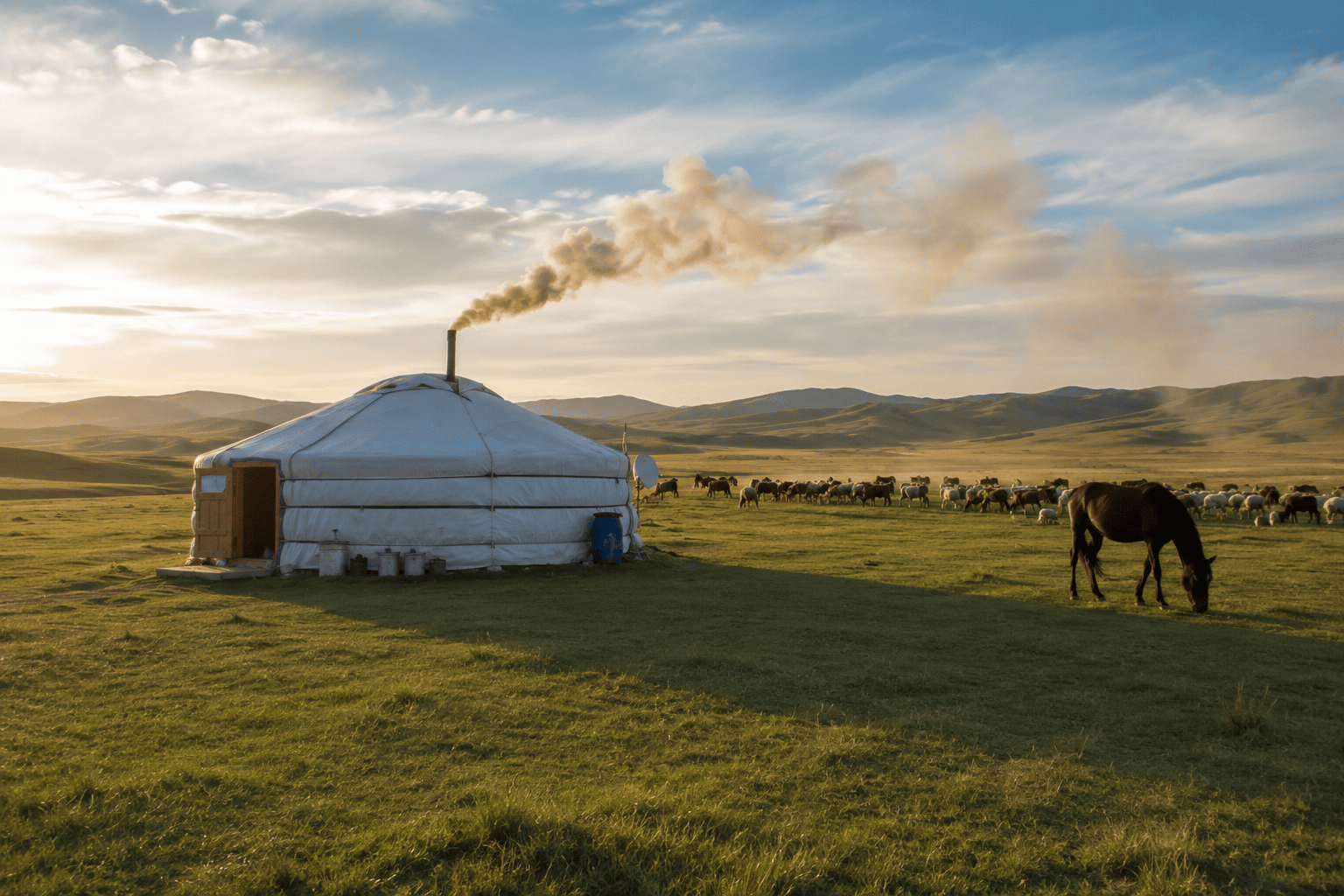
Nomadic Means Being Self-Reliant
Most destinations are known for monuments, ancient cities, famous landmarks, or natural wonders. Mongolia offers something different. The attraction is a living nomadic culture that has endured for centuries. The goal was never to build monumental structures that would outlast generations, but to move with the seasons while leaving as little trace on the land as possible. Nomadic life means you’re on your own. There are no nearby supermarkets, hardware stores, fuel stations, or delivery trucks. Food, clothing, shelter, tools, transportation, and heat all depend on what you can produce or gather yourself.
One reason cultural tours in Mongolia are fascinating is that visitors experience these practical solutions firsthand. They aren't simply methods of survival, but examples of efficiency, adaptability, and resourcefulness that have been refined over generations. Because there is so much to explore, we'll look at one aspect of nomadic life at a time. We'll start with one of humanity's oldest discoveries: fire.
Fire Is Easy Until There Is No Firewood
Fire changed human history. It made cooking possible, provided warmth during winter, offered light after sunset, and allowed people to live in colder environments. Today, most of us rarely think about where our heat comes from. We turn a thermostat, light a gas stove, or have fuel delivered whenever we need it.
Now imagine living hundreds of kilometers from the nearest town. No gas lines. No heating oil. No firewood delivery. "That's easy," you might say. "I'd collect firewood myself." Except for one problem. There are no forests. The open steppe and the Gobi provide something else in abundance: livestock.
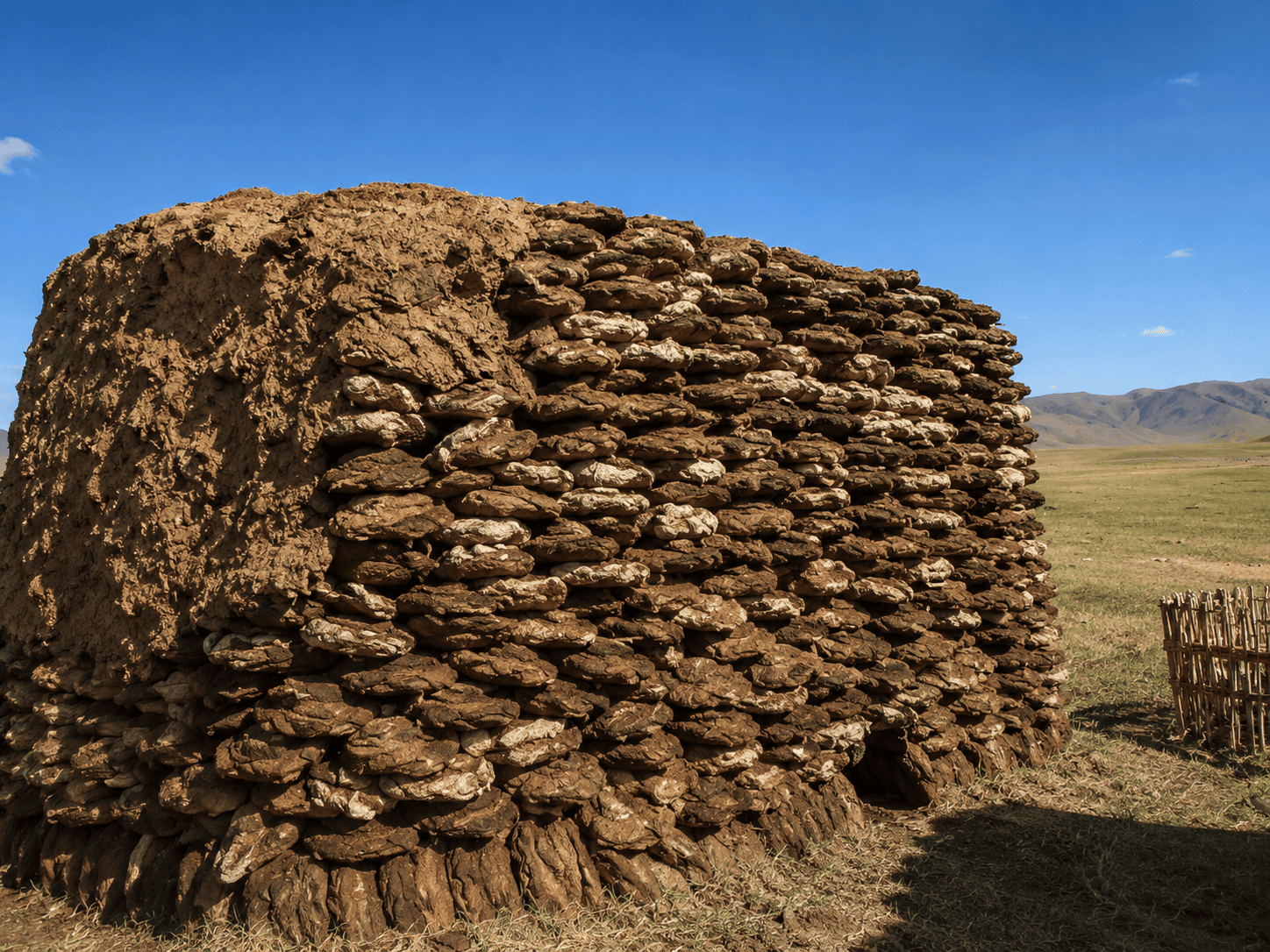
For generations, nomadic families have used dried cattle dung as a practical source of fuel for heating and cooking. Properly dried dung burns much cleaner than most first-time visitors expect. It burns slowly, produces steady heat, and leaves relatively little ash. When visiting a nomadic family, travelers often notice the simple tools used to collect, dry, and stack dung for later use. They also learn that different livestock produce fuel with different burning characteristics. Horse dung burns quickly, making it useful for starting a fire before adding slower-burning cattle dung. The smoke also serves another purpose. From firsthand experience living with nomadic families, we've found it is an excellent natural insect repellent, often keeping mosquitoes and other biting insects away better than mosquito coils.
What began as resourcefulness became tradition. In a landscape without forests, nomadic families transformed what their livestock provided into a dependable source of heat, cooking fuel, and everyday comfort.