

To be nomadic in Mongolia is about much more than just travelling light; it is a sophisticated science of observation and anticipation. True nomadism is the ability to predict shifts in weather and environment, allowing families not just to survive the harsh extremes of the steppe, but to thrive within them.
This lifestyle is a legacy of adaptability passed down through generations. It involves a complex system of sustainability and preservation, where pastures are planned a year, or even several years, in advance. Crucially, as communities move across the open grasslands, a deep-rooted social organisation ensures that nomads remain synchronised, sharing the land without conflict. In a country where there are no private property signs or fences, the nomads "sync" their movements with high precision. This guide explores the mechanics of the nomadic system, the daily realities of herding families, and how you can experience this living heritage during your Mongolia trips.
Understanding the Nomadic Culture
What Is the Nomadic Lifestyle - A Philosophy of Strategic Mobility
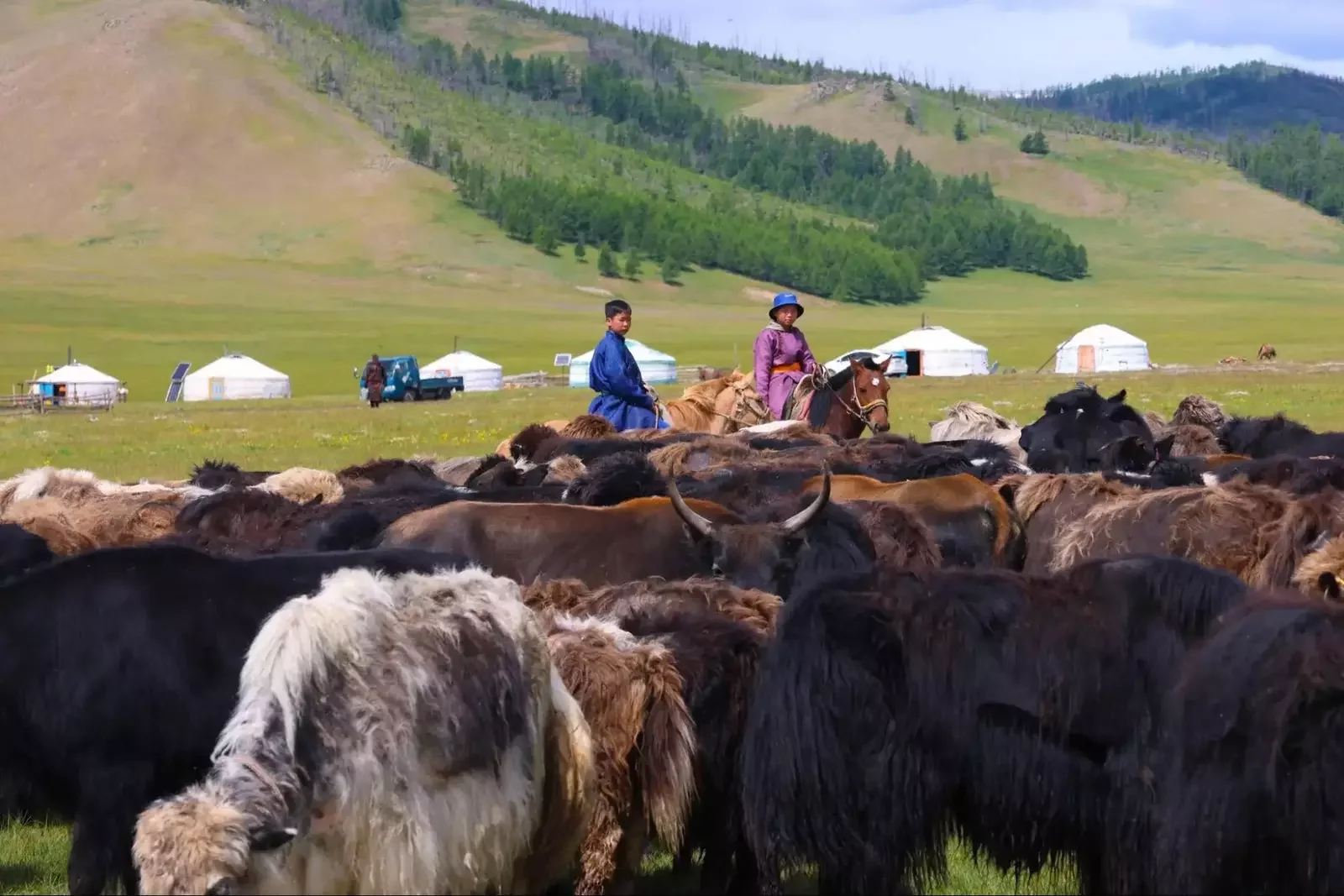
The Nomadic Culture of Mongolia is defined by a strategic and intentional mobility. Rather than being anchored to permanent villages, herding families move their homes and animals several times each year to find the most nutrient-dense grazing land. This system is a direct response to the Mongolian environment, which is naturally better suited for regenerative livestock grazing than the heavy resource demands of static farming. It is a philosophy of fluid movement that prioritises the health of the herd and the resilience of the land over the permanence of structures.
To be truly nomadic is to be fully self-sustainable. It is the ability to produce your own food, fashion your own clothing, and maintain your own accommodation and gear without ever needing to rely on a settled marketplace or a modern supply chain. This total independence from external shopping needs is the ultimate expression of human resourcefulness. In the deep wilderness of the steppe, the nomadic family carries its entire infrastructure with it, proving that true wealth lies in the ability to thrive anywhere.
Historically, this mobile, self-contained way of life provided the tactical foundation for the rise of the Mongol Empire under Chinggis Khan. Because these communities were already skilled horsemen and entirely self-sustaining, they formed armies that could move across vast territories with unprecedented speed. By carrying their entire logistical tail with them, they eliminated the supply-line hurdles that slowed down every other civilisation in history, allowing them to navigate the world's most challenging terrains with ease.
The Living Economy: Livestock in Mongolia
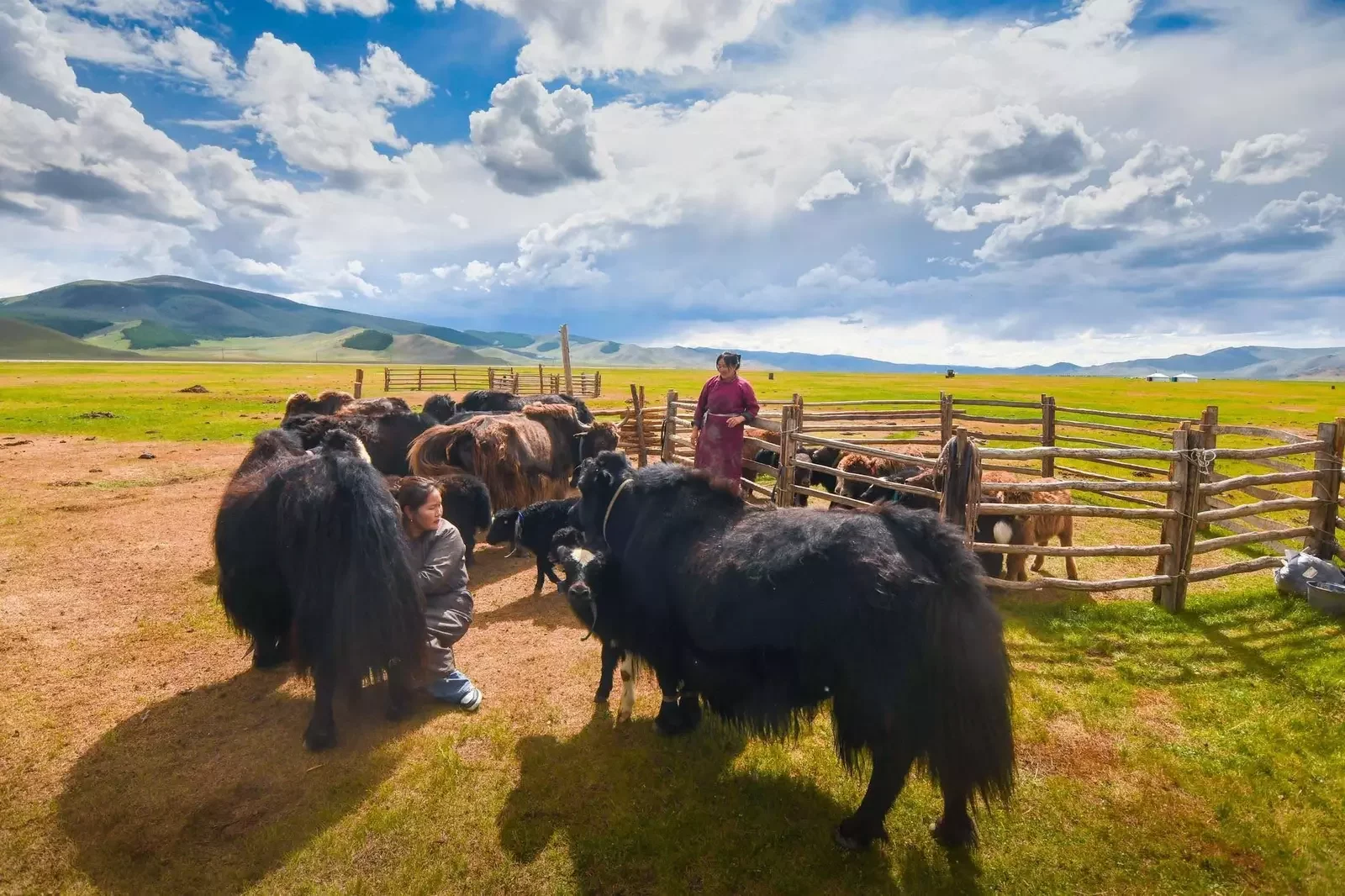
Central to this existence are the "Five Jewels" of the steppe: sheep, goats, horses, cattle (including yaks), and camels. These animals are more than livestock; they are the foundation of a completely closed-loop economy. This specific composition of domesticated animals is the result of careful selection, balancing the different grazing preferences and the utility of each species to ensure the family's survival in the deep wilderness.
The Heavy Lifters: Yaks and Cattle
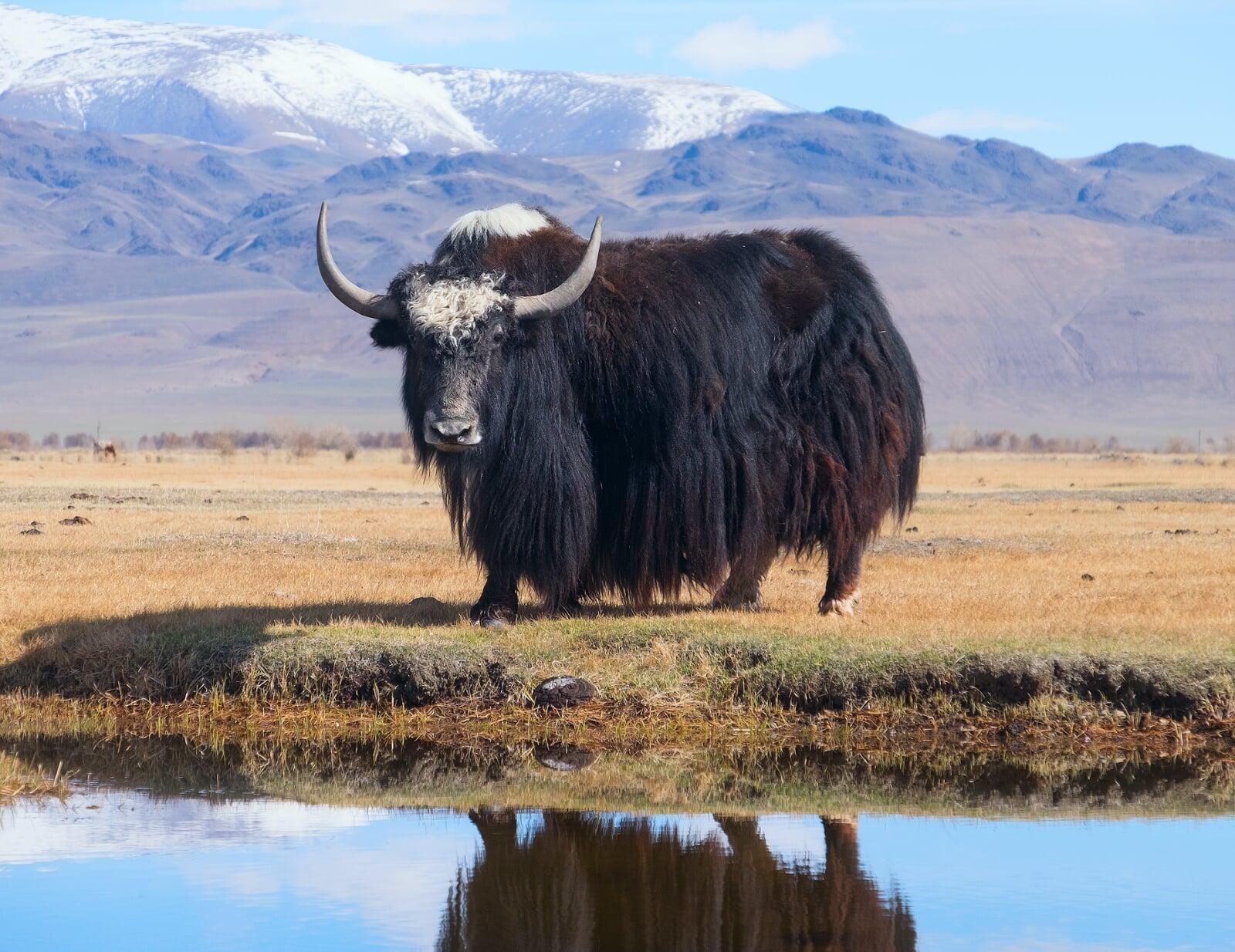
The choice between yaks or cattle is determined by geography, with yaks favoured in the high mountains and cattle on the open steppe. These animals are the primary producers of milk, which is transformed into a vast array of storable dairy products, such as dried curds and yogurts. During the winter, they provide the calorie-dense meat necessary for survival. Beyond food, they are the "heavy haulers" of the nomadic system, traditionally used with ox carts to transport heavy cargo and camp infrastructure during the great seasonal moves.
The Long-Distance Specialist: The Camel
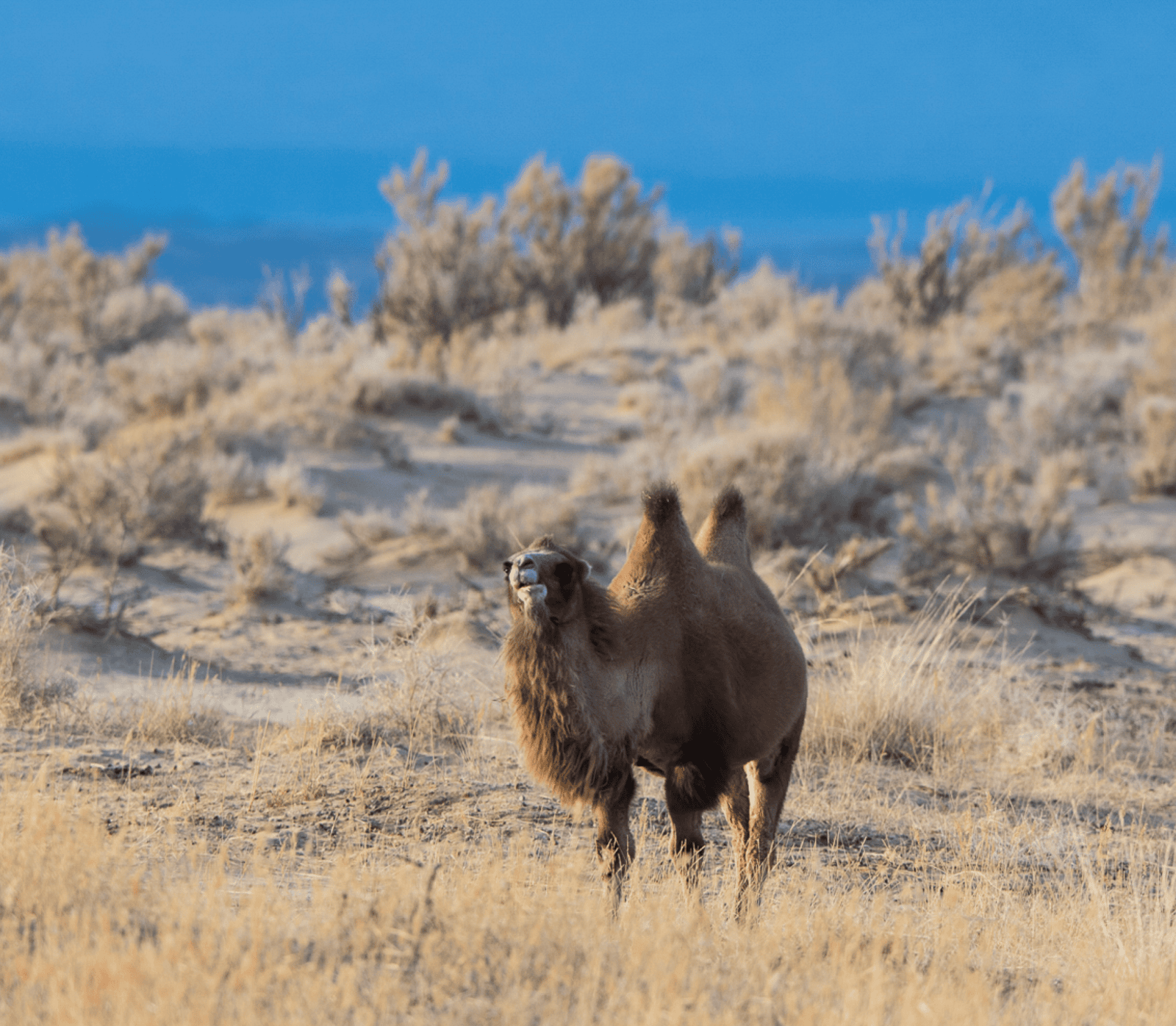
In the arid stretches of the Gobi Desert, the camel is the undisputed master of transport. Well-adapted to dry environments and capable of preserving water for days, they are the ideal long-distance haulers in desert regions. Beyond their strength, they provide nutrient-rich milk and high-quality wool, ensuring that life can thrive even in the most water-scarce environments.
The Cultural Icon: The Horse
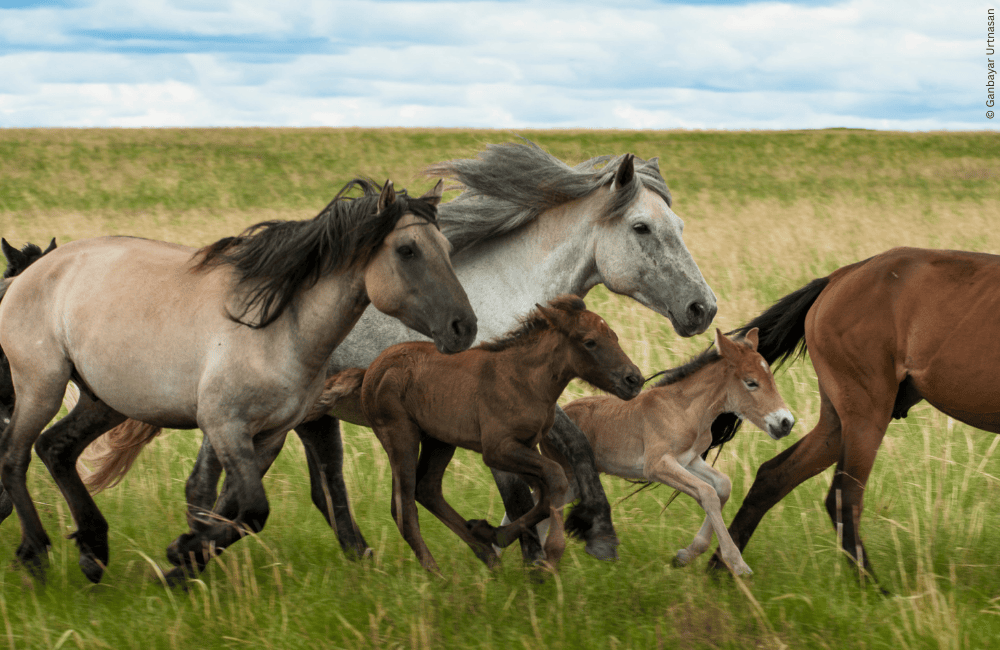
If the other animals represent the economy, the horse represents the spirit. Horses are the essential icon of Mongolian culture, providing the mobility required to manage the other four "Jewels" across thousands of acres. They are the primary mode of transport and a source of fermented mare’s milk (airag). Most importantly, in the nomadic science of winter survival, horses act as the "Icebreakers." In deep snow, they are the ones to break the ice and pack down the paths, clearing the way to the pasture for the other Jewels. The horse is the tool that makes the entire system possible.
The Foundations: Sheep and Goats
Sheep and goats are the most numerous inhabitants of the nomadic camp. While sheep provide the essential meat for the summer months—portioned perfectly for a lifestyle without refrigerators—their most vital contribution is their wool. This wool is processed into the thick felt required for ger insulation and warm bedding. In the flock, goats serve as the strategic leaders; being more active and agile than sheep, they steer the entire group toward fresher grazing grounds. Beyond leadership, goats produce high-value cashmere, the gold standard for lightweight warmth.
Predictive Intelligence: The Science of Seasonal Migration
Nomadic families follow a highly calculated migration pattern designed to balance livestock protection with the long-term health of the grazing land. This is not a random search for grass, but a data-driven move dictated by water availability, pasture capacity, and environmental sustainability. By moving frequently, herders ensure that no single location is pushed beyond its carrying capacity, preserving the grasslands for generations.
Winter camps are located in sheltered valleys or mountain folds to block the relentless arctic origin winds. Because winter temperatures can drop below -40°F, the choice of location is a matter of life. During this season, the nomads rely on the "Science of Snow", using the snowpack as their primary water source for both the family and the herd, eliminating the need for proximity to frozen rivers.
Spring is the most challenging period on the steppe. Both the families and the livestock have exhausted the fat reserves that sustained them through winter, yet this is precisely when the new offspring are born. Herders move to areas with the earliest emerging "mother grass" and reliable water sources to support the vulnerable newborns. Historically, this was also the season when nomadic groups were most vulnerable to attack; as a result, migration patterns were designed with calculated exit routes and defensive positioning in mind. It remains a season of high-intensity labour, during which the nomadic system is tested to its limits.
As the land thaws, families move to wide summer pastures. This is the phase of abundance where livestock can roam vast areas. Proximity to rivers and lakes becomes the priority, as animals need significant water intake to recover from the spring. The goal here is simple: maximise the health and weight of the herd while the nutrient-rich grass is at its peak.
Autumn is a period of intense preparation. Families move to specific nutrient-dense grazing areas known to help livestock build a thick layer of fat, the "biological battery" that will fuel them through the coming winter. Simultaneously, the nomadic household focuses on food preservation and winterising gear. In the science of the steppe, a successful autumn determines the survival of the following spring.
Architecture of Resilience: The Design and Tradition of the Ger
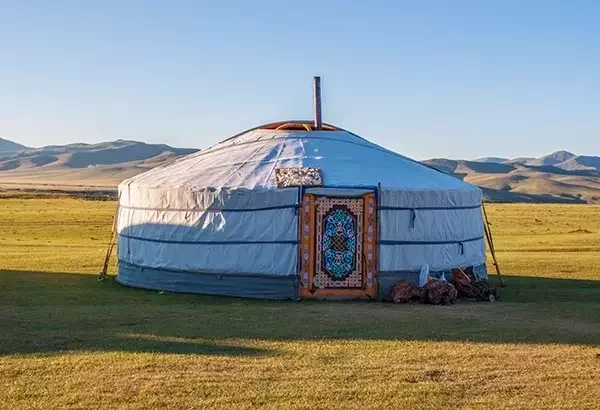
The Ger is the pinnacle of portable architecture. It is neither a tent nor a teepee, but a spacious feat of engineering designed for maximum insulation, comfort, and natural ventilation. Built to be assembled or dismantled in under two hours, the entire structure is designed to be mobile, fitting perfectly onto two ox carts or two camels for transport across the steppe. Its circular, aerodynamic shape is its greatest defense, allowing it to withstand the unyielding winds that would flatten a conventional, flat-walled structure.
The Engineering of Organic Insulation
The structure is a sophisticated sandwich of materials. A wooden lattice frame provides the strength, which is then covered with multiple layers of sheep's wool felt. This organic material acts as a high-performance thermal barrier, keeping the interior cool in 100F summer heat and trapping the warmth of the central stove when temperatures drop to -40F.
Because felt is a natural, breathable fiber, it provides unique air filtration and temperature regulation. This organic environment, which includes felt sleeping mats, creates a living space far more harmonious with human health than the synthetic materials used in modern housing. The entire structure is held together by tension, using braided horsehair or camel wool ropes, requiring no permanent foundations and leaving zero footprint on the land once moved.
The Internal Social Map
Inside the ger, the space is governed by a precise social and spiritual geography. Every square inch has a designated purpose:
The place of honor, located opposite the door. This is where sacred items, family treasures, and respected guests are placed.
Reserved for the men of the family and their tools, including saddles, airag bags, and hunting gear.
The domestic heart of the home, containing cooking utensils, dairy processing tools, and children's items.
The hearth, which represents the family's link to their ancestors.
For the traveller, the ger is more than accommodation; it is a lesson in intentional living. It proves that a home need not be static to be permanent, and that luxury on the steppe is defined by warmth, hospitality, and efficiently organized space.
A Masterclass in Grit: The Logistics of the Daily Cycle
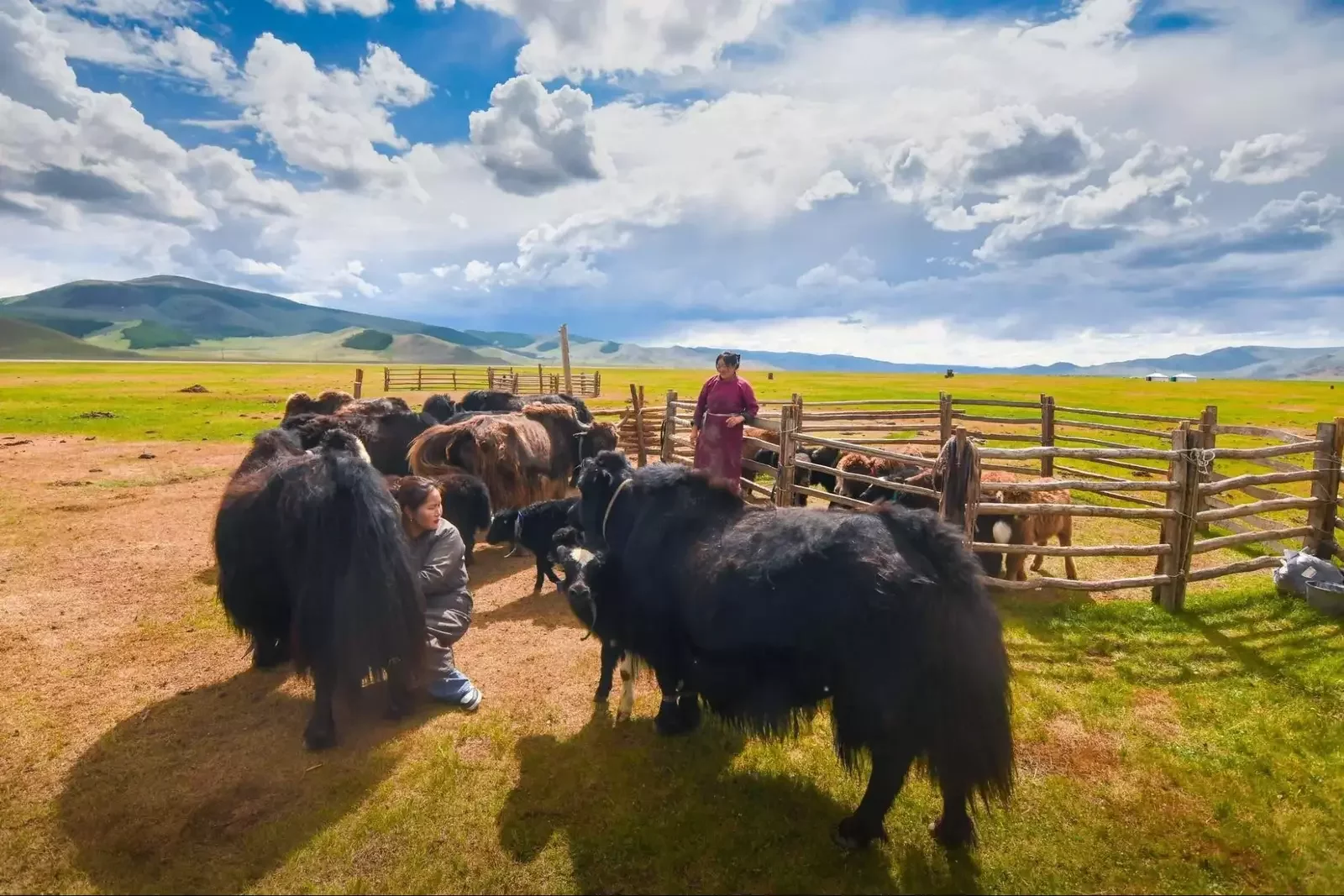
Life on the steppe is a high-stakes synchronisation between the sun and the "Five Jewels." In an environment traditionally devoid of refrigeration, every chore is a logical step toward total self-sustainability. In the nomadic camp, there is no such thing as waste; every byproduct of the herd is repurposed into fuel, food, or gear.
The Seasonal Rhythm
The nomadic routine is not static; it expands and contracts with the seasons.
The Peak of Production. This is the season of abundance and joy. With a near-endless supply of fresh milk, the camp becomes a 24-hour production line. Families work in shifts to produce butter, yogurt, and various cheeses. Even the oils for candles are rendered during this time.
The Season of Consolidation. This is traditionally the time for celebrations and weddings, fueled by the summer’s harvest. It is also the most critical window for preservation. Families process the remaining dairy and meat into shelf-stable forms to bridge the gap through the coming cold.
The Off-Peak Survival. Winter is the season for enjoying the fruits of the previous months' labor. Life slows down, with a focus on heat conservation and protecting the "biological battery", the fat layers of livestock.
The Morning Synchronization: Heat and Labor
The nomadic day begins with a calculated use of temperature. All boiling and heat-intensive dairy processing is completed in the early morning while the air is still cool. This ensures the products are set correctly, and the ger remains comfortable for the rest of the day.
Once the milking is complete, the livestock begin their journey to the pastures. In the "Science of the Steppe," not all animals require the same oversight. While horses and camels are largely self-managing, the sheep and goat flocks require active herding. This isn't viewed as a burden, but as a "pleasurable necessity"—family members take turns on horseback or on foot, using the time to monitor the health of the land.
Midday Production and Modern Integration
As the morning heat rises and the heavy cooking is finished, the midday is dedicated to "dry" production. This includes the final stages of dairy fermentation, sewing felt for the ger, or repairing gear.
A unique aspect of the modern nomadic system is its harmony with the educational calendar. As autumn closes and the production season ends, children typically move to the closest town to attend boarding school. This "Modern-Nomadic Hybrid" allows steppe traditions to continue while ensuring the next generation is integrated into the global world. The seasonal cycle and the school calendar work in a logical sync.
Cultural Traditions and Festivals
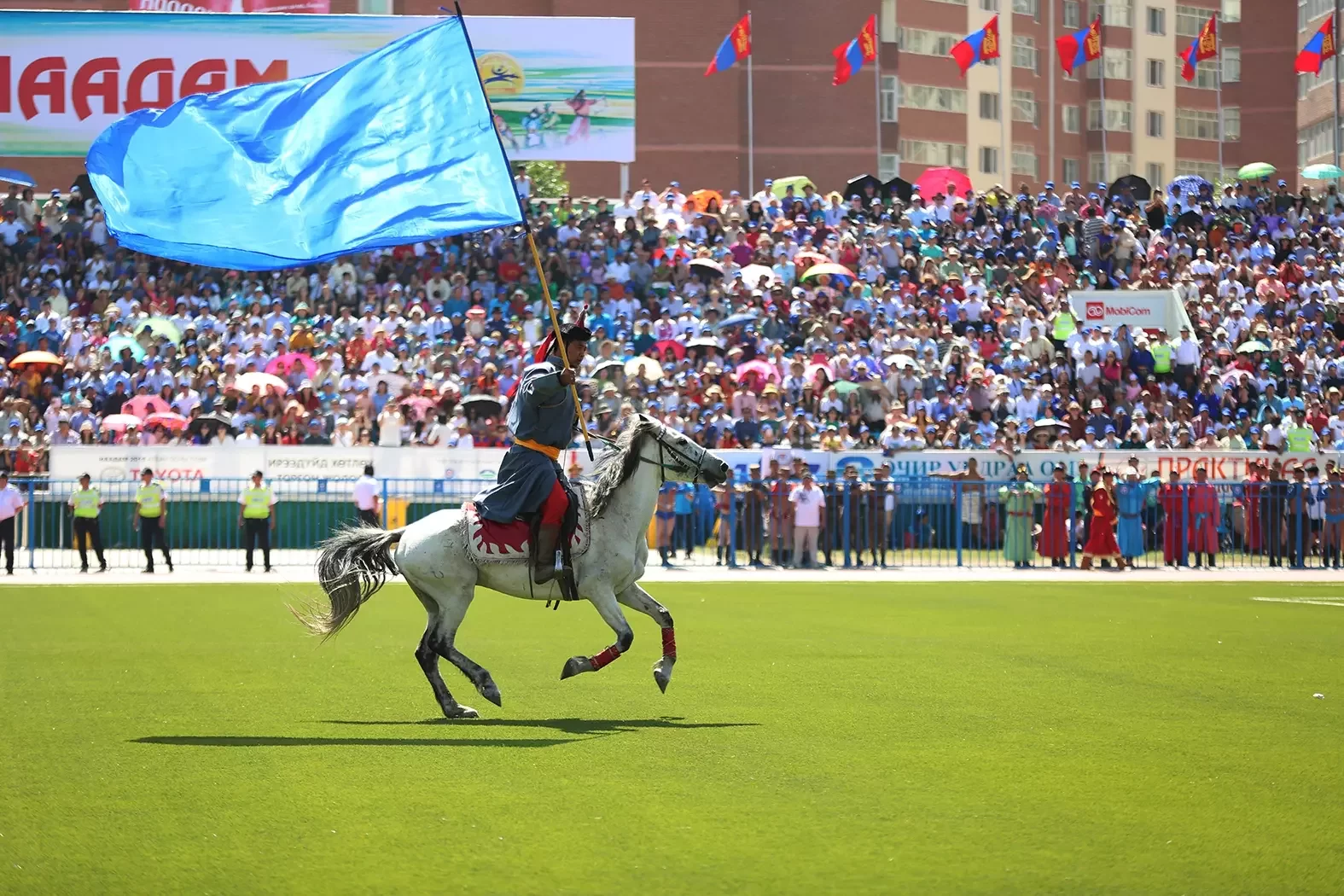
Festivals in Mongolia bring together communities that are usually spread across vast distances. The most important is the Naadam Festival, held every July, which celebrates national identity and features the three traditional “Manly Games”—skills once essential for survival on the steppe.
The term “Manly” reflects the festival’s historical roots, where men displayed strength and skill, symbolizing the resilience and competitive spirit of Mongolia’s nomadic culture.
The Three Pillars of Competition
Horse Racing
Unlike Western track racing, Mongolian races are cross-country marathons spanning 10 to 20 miles across open grasslands. In a remarkable display of trust and skill, the jockeys are children, both boys and girls, between the ages of 8 and 14. The distances are strictly categorized by the horse's age, ranging from two-year-olds to adults aged six and up. For two-year-old horses, younger, lighter children are selected for a balanced race that is pleasant to witness. For adult horses, older children provide the strength and control needed to handle these well-trained, high-energy beasts.
Mongolian Wrestling
It is a fascinating scientific contrast: while horses are divided into "weight categories" by age for fair competition, human wrestlers have no weight categories at all. This is because traditional Mongolian wrestling focuses on balance and leverage rather than pure grappling. The physics of the match are simple but unforgiving: if an opponent touches the ground with anything other than their feet, even an elbow or a knee, the match is over.
Archery
A competition of traditional composite bows made of horn, wood, and sinew. In modern times, archery has evolved into separate competitions for men and women, demonstrating the accuracy that was once a requirement for nomadic defense and hunting
While the largest celebrations take place in Ulaanbaatar, we often recommend the smaller, local Naadam festivals. These "grassroots" events offer a more intimate look at the competitive spirit that defines the nomadic heart, where the entire community gathers to witness the local steppe champions.
Beyond Tourism: The Integration
For those seeking an authentic connection to the land, experiencing nomadic life is not about being a spectator; it is about active integration. Travelers interested in the deep heritage of the steppe move beyond the city centers to engage with guided programs that offer a realistic view of daily life. This immersive approach is the cornerstone of modern Mongolia tourism, allowing for a connection that static sightseeing cannot provide.
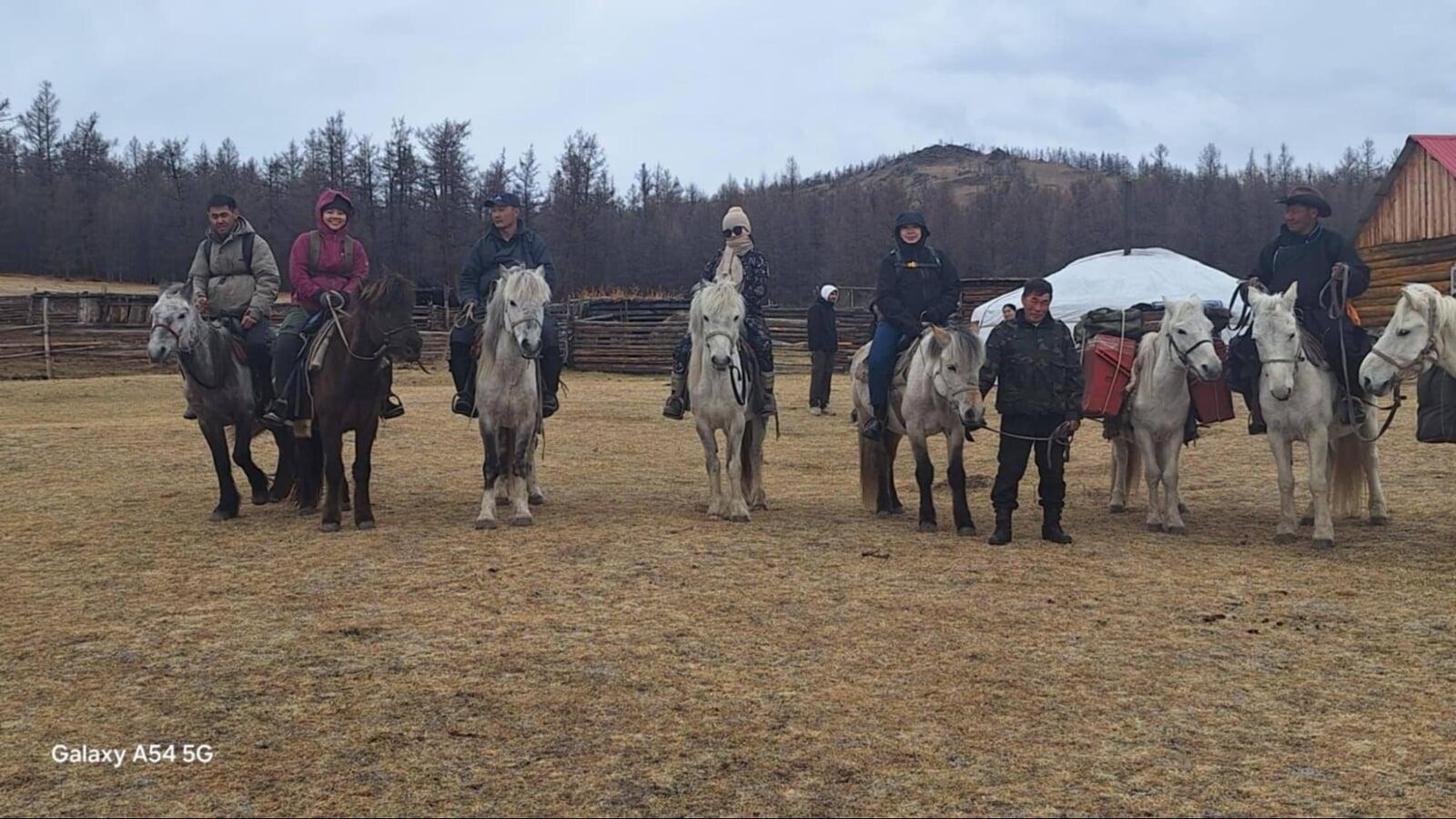
By joining anomadic family tour in Mongolia, you step into a system perfected over millennia. This is an opportunity to witness the "Science of the Steppe" firsthand through activities designed to be both organic and practical:
The Architecture of Sleep: Staying overnight in a traditional ger to experience its unique thermal regulation and the "breathability" of organic felt.
Herd Management: Observing the sophisticated, fence-free methods used to synchronize the "Five Jewels" across the open landscape.
The Culinary Lab: Helping prepare traditional foods and witnessing the high-efficiency, waste-free processing of dairy and meat.
Nomadic Mobility: Horse riding across the open grasslands—mastering the primary mode of transportation that once shaped a global empire.
Practical Tips for Visiting the Mongolian Steppe
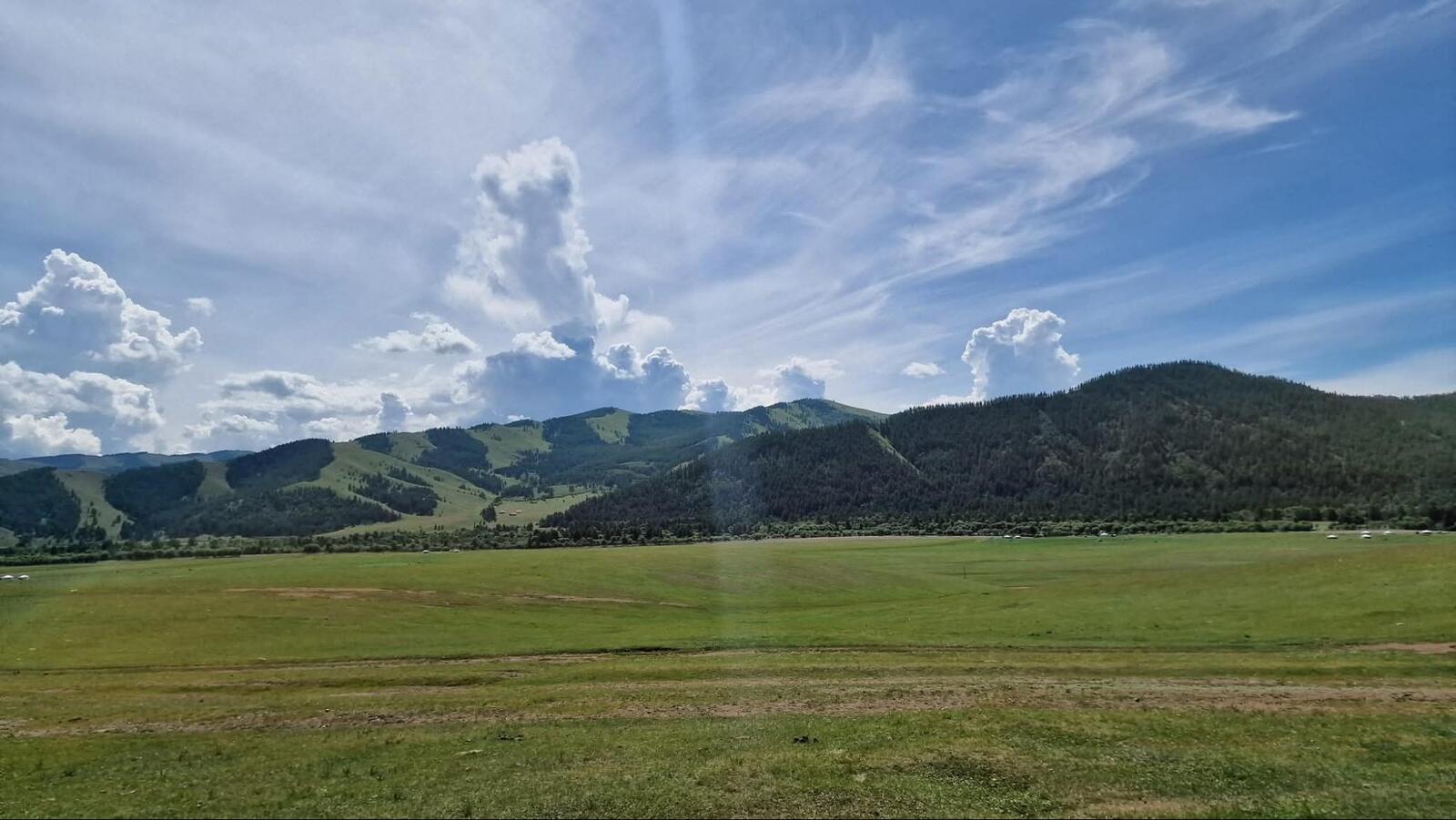
Travelling in rural Mongolia is a logistical undertaking that requires a shift in mindset. Because the steppe operates on environmental data rather than city clocks, preparation is the key to a successful expedition.
Strategic Timing
The most comfortable window for exploration is from June to September. During these months, the weather is milder, and the "Abundance Season" is in full swing. This is when the dairy production is at its peak, and the landscape is at its most vibrant.
Field Intelligence for Travellers
Accommodation Hierarchy: Depending on the region, you may stay in traditional ger camps, family homestays for deep integration, or sustainable eco-lodges.
Temporal Planning: Distances on the steppe are measured in terrain, not miles. Plan for longer travel times and embrace the pace of the landscape.
Thermal Layering: Weather conditions can shift rapidly. Bring a versatile clothing system capable of handling the 100F sun and the sudden chill of a steppe wind.
Expert Navigation: Always travel with experienced guides. In a landscape without fences or paved roads, local knowledge is the most reliable GPS.
Conclusion: The Enduring Legacy of the Nomad
The traditional lifestyle of Mongolia is a living testament to human ingenuity. It is a philosophy of fluid movement, a "Living Economy" of livestock, and a masterpiece of portable architecture. From the predictive intelligence of seasonal migration to the competitive spirit of the Naadam Festival, every element of life on the steppe is a calculated response to a beautiful yet unforgiving environment.
This ancient system continues to shape rural communities today. Seasonal migration, livestock herding, and cultural traditions remain the central pillars of life on the steppe, proving that the nomadic way of life is not a relic of the past but a sustainable model for the future.
For the traveller, exploring Mongolia tourism through its rural heart offers more than just a glimpse into history; it provides a profound understanding of how humans can live, work, and thrive in total harmony with the natural world. For those planning Mongolia culture holidays, this is a journey into the heart of a society that has mastered both the science of survival and the art of hospitality. It is an invitation to witness a living heritage that remains as resilient and relevant as ever.