Things to Do in the Mongolian Gobi Desert: Dunes, Fossils, Camels & Night Trips

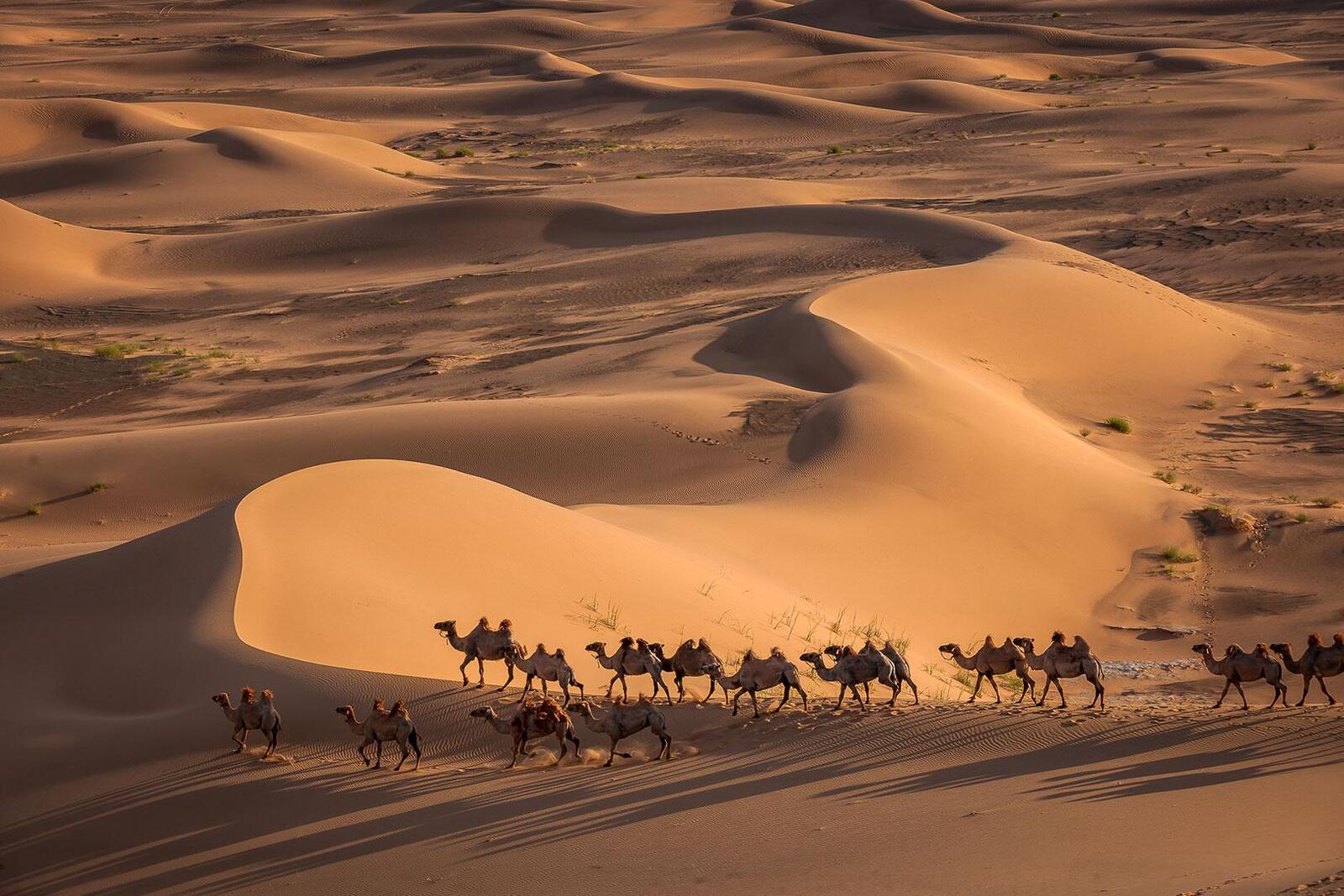
Bactrian camels trekking through sand dunes in the Mongolian Gobi Desert landscape

The Gobi deserves a place near the top of any Mongolia travel bucket list.Once part of an ancient seafloor, later a dinosaur landscape, and today home to rare wildlife, nomadic families, and two-humped Bactrian camels, the Mongolian Gobi Desert holds many layers of our planet’s history. 
That history is not hidden in a museum. It is spread across the land, fossil cliffs, singing dunes, mirages, dry valleys, camel herds, night skies, and families who still know how to live in a demanding environment.

Walk Through Yol Valley

Yol Valley is often one of the first major stops on a Gobi route. It is close to the main road from Ulaanbaatar and also near Dalanzadgad, the provincial center. If you arrive by a short domestic flight from Ulaanbaatar, Yol Valley may be the first place where the Gobi begins to reveal itself.

Yol Valley, named after the bearded vulture, is a narrow mountain gorge where the air is cooler and the shadows last longer. In some seasons, ice remains deep inside the valley even when the surrounding desert is warm. That contrast is worth experiencing. After the hot plains, walking into Yol Valley can feel like entering nature’s own air-conditioned room. Because of its cooler temperature and sheltered environment, the valley also attracts wildlife, especially in summer. This is where many travelers realize that the Gobi is neither flat nor simple. It has mountains, hidden canyons, wildlife, streams, and sudden pockets of softness.

The walk is not difficult. From the wide mouth of the valley, the path gradually narrows until it reaches a passage with a small creek. In places, it narrows to the point that only hikers can pass through. If you enjoy hiking, you do not have to return the same way. You can continue through the valley and come down on the other side, where your vehicle can meet you. With more time and the right support, Yol Valley can also become a full-day hike or even a two-day camping experience above the gorge.

Visit the Flaming Cliffs
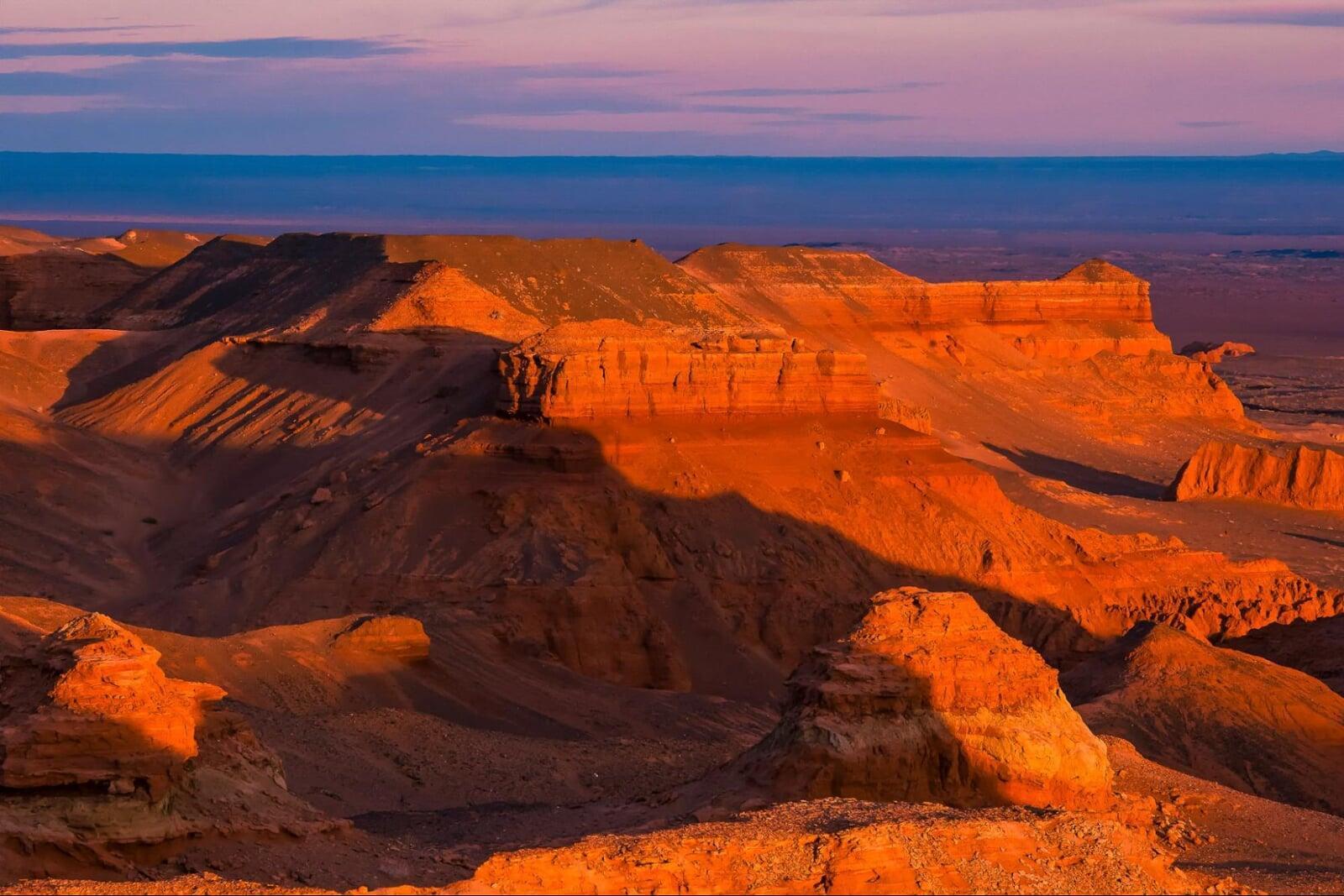
Flaming Cliffs Bayanzag in Mongolian Gobi Desert red sandstone cliffs things to do in Mongolia

The next major stop on many Gobi routes is Bayanzag, better known as the Flaming Cliffs. The cliffs are famous for two reasons: color and fossils. At sunrise and sunset, low-angle light intensifies the natural red and orange tones of the sandstone. At the right hour, the cliffs seem to hold the light rather than simply reflect it. 
The whole formation appears to burn quietly from within. In addition to their beauty, the Flaming Cliffs are an important fossil site in dinosaur research. In the 1920s, the American Museum of Natural History expedition, led by Roy Chapman Andrews, discovered dinosaur egg nests in this region, providing the first clear evidence of how dinosaurs reproduced. Andrews is often described as one of the inspirations associated with the Indiana Jones character. 
One interesting story is connected to Oviraptor, often translated as egg thief. When the fossil was first discovered near eggs, it was thought to be stealing from a nest. Later discoveries changed the interpretation. Oviraptor may not have been a thief at all, but a brooding parent protecting its eggs.

Climb the Khongor Sand Dunes

Bactrian camels trekking through sand dunes in the Mongolian Gobi Desert landscape

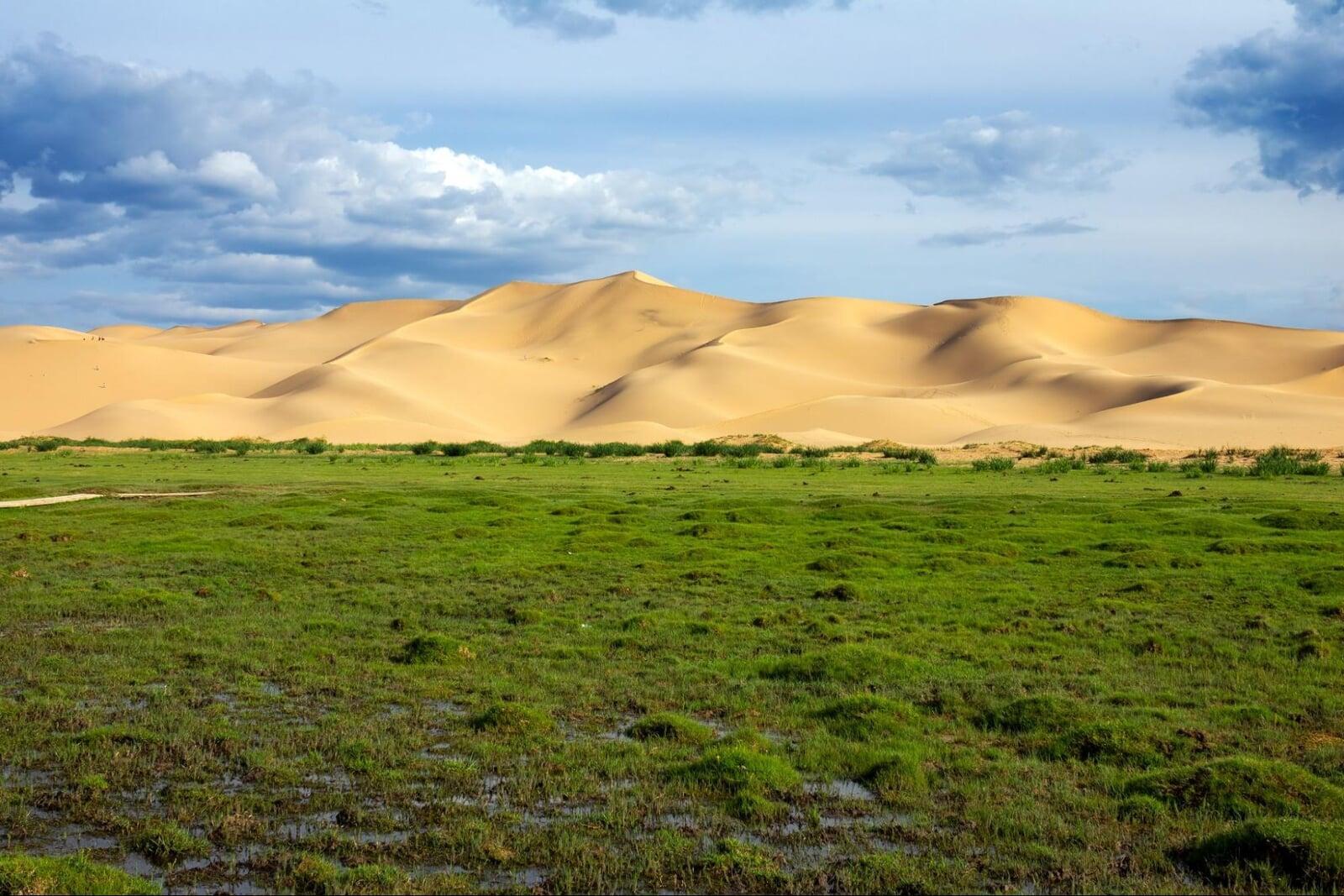
Farther west on the route, the Khongor Sand Dunes rise suddenly from the plain. They are an iconic sight in the Gobi, with long, high dunes, grassland on one side, and desert stretching away on the other. From a distance, they look still. Once you begin climbing, you realize how alive sand can be. 
The dunes are known as the Singing Dunes. Under the right conditions, when dry, well-sorted sand grains slide together, they can create a deep vibration or humming sound. It is one of those natural phenomena that feels almost impossible until you hear it yourself. 
Climbing the dunes is simple in theory and challenging in practice. Have you ever wished to walk up an escalator in the opposite direction, but never had a chance because of the crowd around you? This is your opportunity to see how it feels. One step up, half a step sliding back. If you are a StairMaster enthusiast, this is your place.

Watch for Mirage and Big-Sky Landscapes

Human eyes are meant to look far. But in daily life, we rarely let them. Walls, screens, buildings, and objects interrupt the distance. Something is always close to us, blocking the view.
The Gobi teaches the eyes to stretch again. Because the horizon is open, small things become visible from a great distance: a moving herd, a vehicle trail, a ger, a line of animals, a shift in weather. The sky feels unusually large because nothing interrupts it.
On hot days, you may see a mirage. This happens when layers of hot and cooler air refract light near the ground, making the distance appear to shimmer. Sometimes it looks like water. Sometimes the horizon appears to float.

Take a Gobi Night Trip

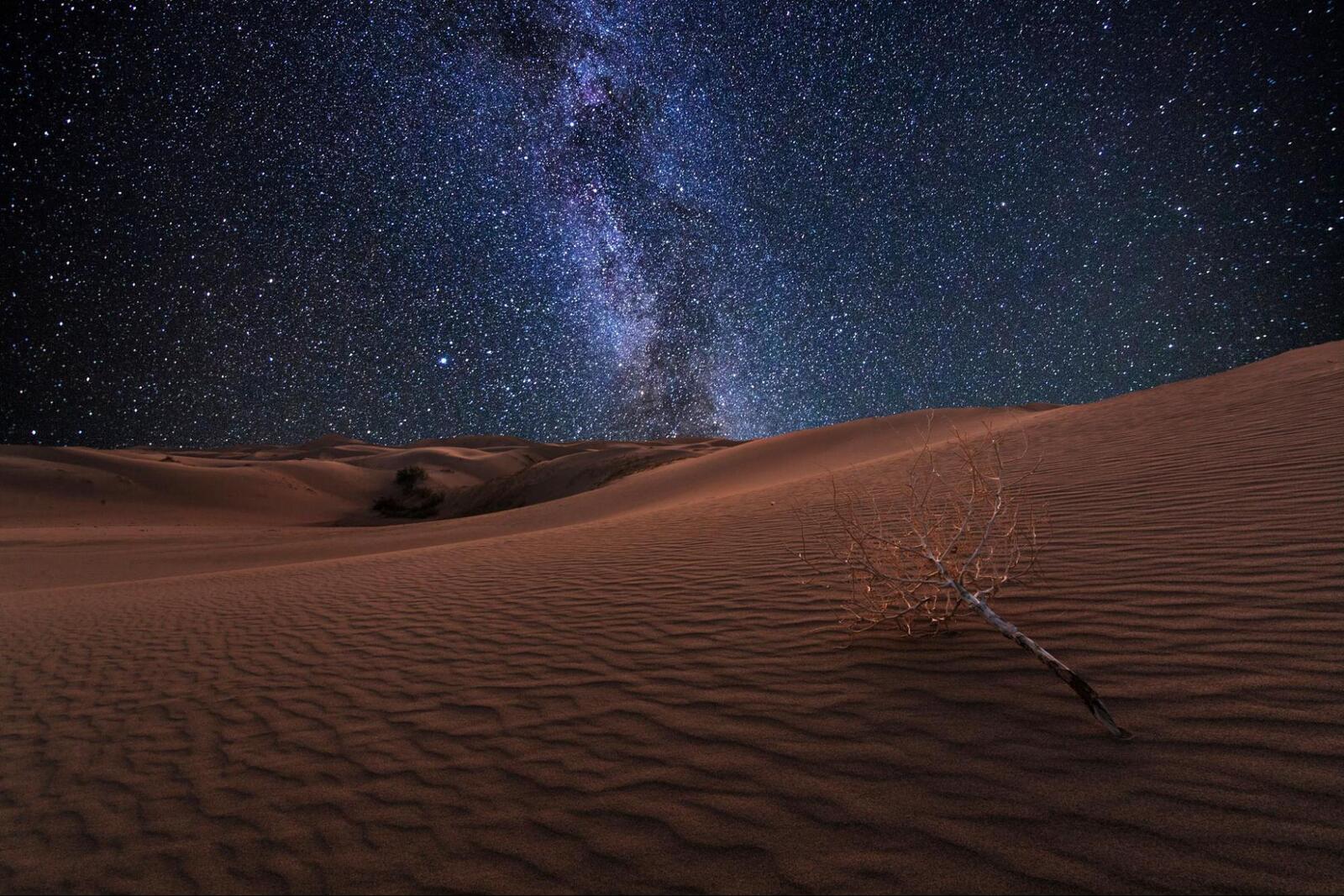
Gobi Desert night sky with Milky Way over sand dunes Mongolia

Night in the Gobi is different from night in the city. In remote areas, there is almost no light pollution. The darkness becomes real darkness. When the sky is clear, the stars and the Milky Way can appear with astonishing force. Add silence. Add distance in all directions. Add the cooler air after sunset. The Gobi becomes another world.
There is a reason Mongolia’s Gobi has drawn interest as a Mars-analog landscape, including the MARS-V Project’s effort to develop a Mars simulation site in the desert. The dry terrain, isolation, and otherworldly scale make the comparison easy to understand.
The night experience begins before the stars. The prelude is part of it: setting up camp, sharing a hearty meal, sitting in a comfortable camping chair, watching the last light leave the dunes or cliffs.
Then the sky opens. If stargazing is a major part of your trip, it is worth planning your route around the moon phase, weather, and camp location.

Visit a Nomadic Camel-Herding Family

In the midst of all this natural fascination, there are the people. And sometimes the people are more fascinating than the landscape. The Gobi is home to nomadic families who live with camels, goats, sheep, and horses, in step with the weather and pasture. Their lives are shaped by movement, patience, and efficiency. Nomadic families traditionally do not lock their doors when they are away. If they are out herding livestock and travelers stop by, the ger is still a place of welcome. Come in. Sit down. Have tea. Rest. Make yourself at home.

If the host is home, the hospitality is even greater: tea, snacks, conversation, and, if there is time, even a place to sleep. Nothing is demanded in return. You are simply a guest.
From a modern city perspective, this can be hard to understand. But in Mongolia, hospitality is not a performance. It is part of the culture. Through conversation, you begin to see how people organize life around animals, weather, water, movement, and time. You see how milk is processed, how food is stored, how a ger is arranged, and how efficiency and generosity can exist together.

Ride a Two-Humped Bactrian Camel

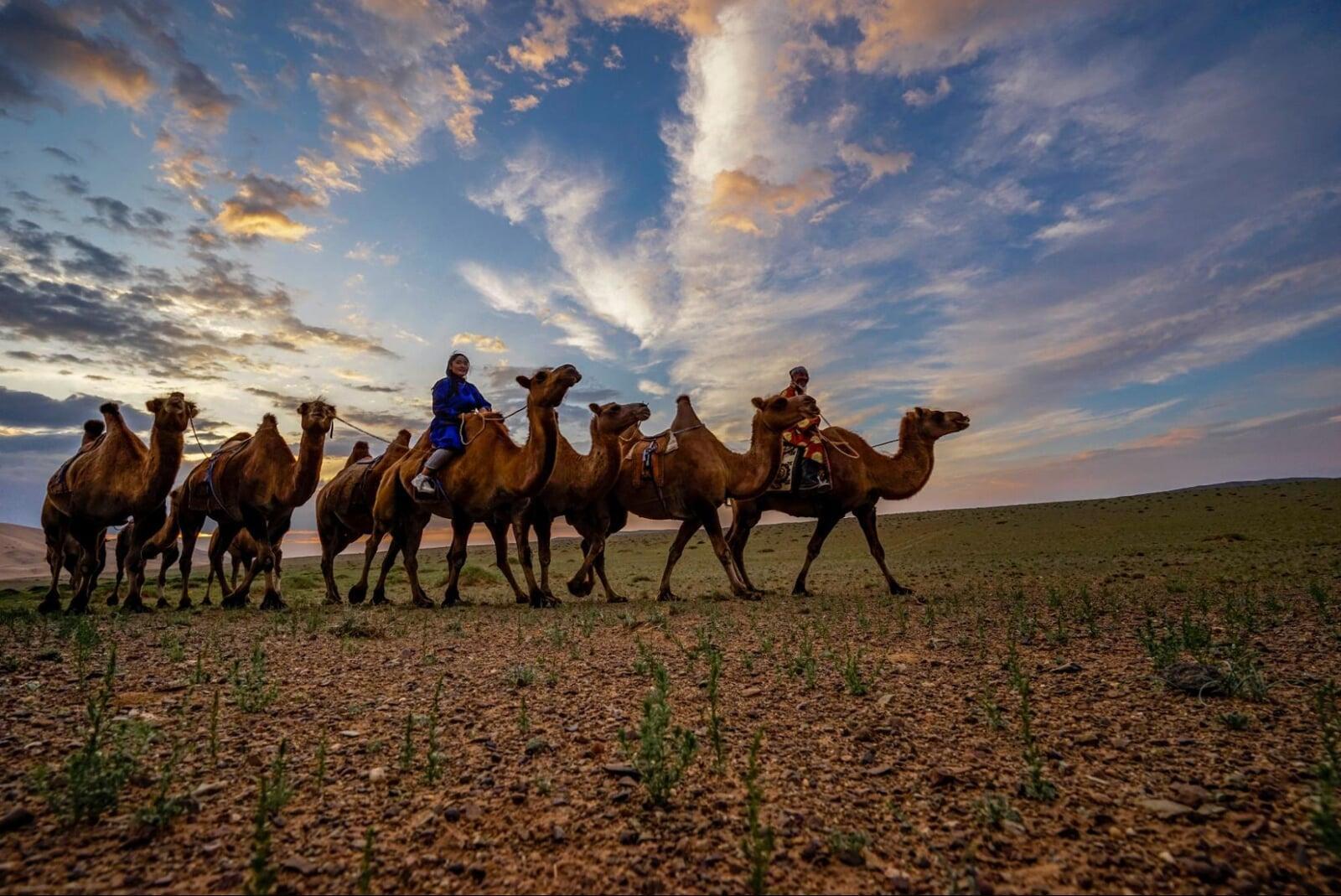
Bactrian camel ride in Mongolian Gobi Desert travel experience
The Bactrian camel, with its two humps and thick coat, belongs to the Gobi. It can survive cold winters, dry summers, sparse vegetation, and long distances. With its two-hump structure, it carries a sense of balance, stability, patience, and endurance. It is a true gem of the desert.
Now imagine the state of mind that comes from having a camel as your daily ride and commute. A short camel ride near the dunes gives travelers a gentle introduction to this relationship. The first thing you notice is support. The camel moves steadily, with a quiet confidence that seems perfectly matched to the landscape.

How Many Days Do You Need for a Gobi Desert Tour?

The Gobi can be visited on a short trip, but it should not be rushed. A 3 to 4-day Gobi tour is possible, but it usually feels tight and may cover only part of the region. A 5 to 6-day route gives a better introduction, especially if your goal is to see the main highlights.

For most first-time travelers, 7 to 8 days is a stronger choice. It allows time for Yol Valley, Khongor Sand Dunes, the Flaming Cliffs, camel riding, nomadic family visits, and the long drives between them.

With 9 days or more, the journey can become slower and more comfortable. You can spend more time at each place, add photography stops, include night experiences, or combine the Gobi with Central Mongolia.
If you are deciding how much time to give the Gobi, we can help shape the route around your dates, interests, and pace.

FAQ

The best things to do include walking through Yol Valley, climbing the Khongor Sand Dunes, seeing the Flaming Cliffs, riding a Bactrian camel, visiting a nomadic camel-herding family, watching the sunset, and experiencing the Gobi night sky.

Yes. The Gobi is one of the most memorable regions in Mongolia because it combines desert landscapes, fossils, camels, nomadic culture, canyons, dunes, and some of the clearest night skies in the country.

A short Gobi trip can be done in 3 to 4 days, but 7 to 8 days is better for most first-time travelers. This allows enough time to see the main highlights without rushing.

Yes. In remote parts of the Gobi with clear weather and little moonlight, the Milky Way can be visible. For the best experience, plan around the moon phase, camp location, and weather conditions.

Yes. Many Gobi routes are suitable for families, especially when the itinerary includes comfortable ger camps, balanced driving days, camel riding, and flexible pacing.