
Discover the Khanbogd–Shar Tsav Geopark
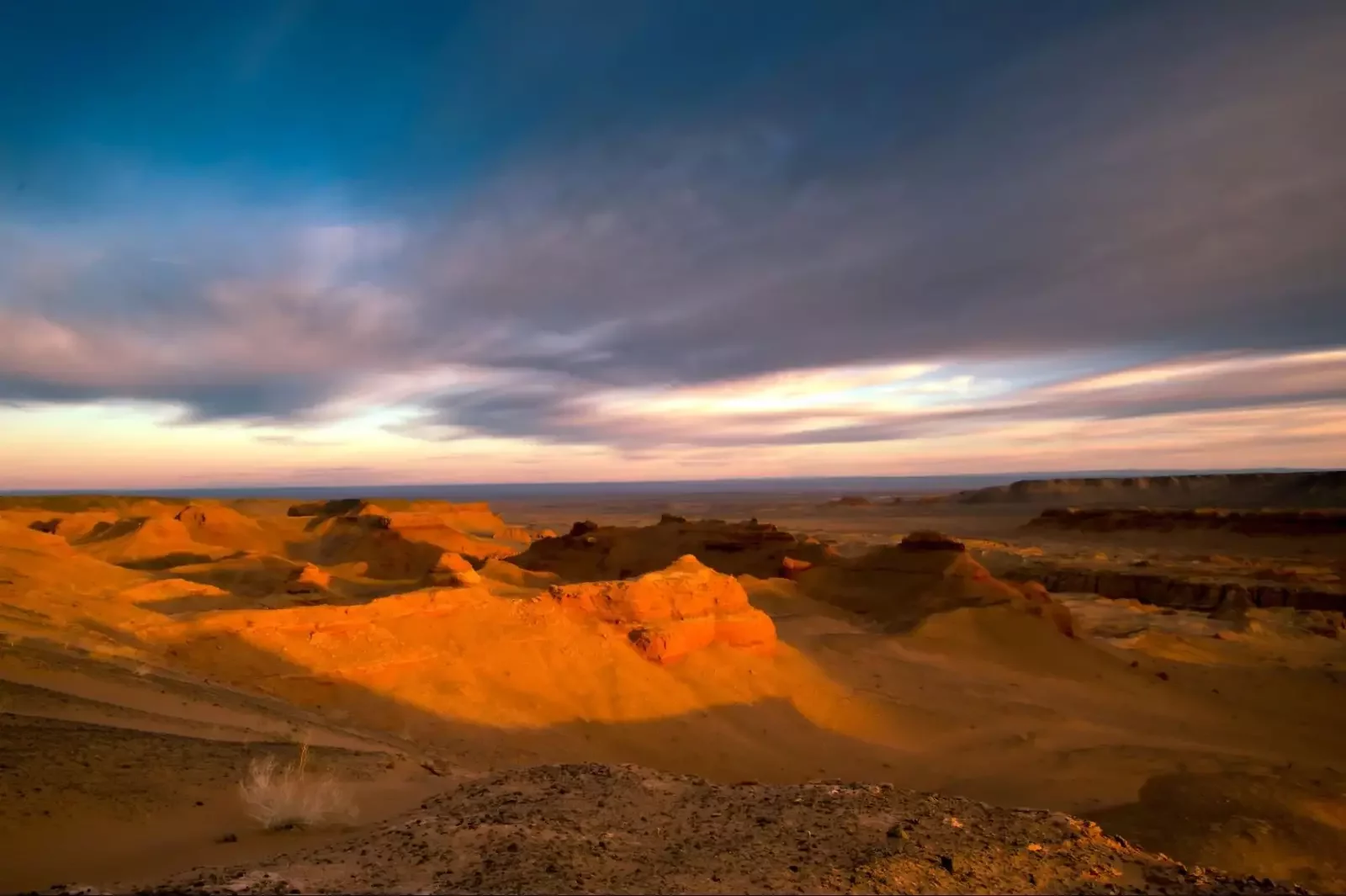
When a country recognizes a landscape or its wildlife as incredibly important, it protects them by designating them as national parks, preserving their significance for the nation.
But what happens when a place is spectacular, so ancient, and unique that its significance goes beyond just one country? When a landscape is a vital part of history for all of humankind, it receives the prestigious designation of a UNESCO Global Geopark.
Today, only about 50 countries protect and share these extraordinary spaces. Mongolia has been accepted into this elite global family with its brand-new Khanbogd–Shar Tsav Geopark. Its preservation is designed to share our country's global legacy with travelers from all corners exploring the iconic Gobi Desert.
This massive sanctuary in the Mongolian desert Gobi is an open-air archive of our planet’s history. It preserves 290-million-year-old volcanic structures, dense petrified forests, thousands of ancient dinosaur footprints, and sacred spiritual energy centers.
Gobi Travel & Sustainable Preservation
As Mongolia's first National Geopark prepares for its official UNESCO Global Geopark nomination, Gobi Travel is proud to support local community-led tourism initiatives in the Gobi. Our custom expeditions directly employ local nomadic guides, support regional conservation, and ensure that our visits leave zero footprint on these highly delicate, millions-of-years-old fossil sites.
The Big Three. What to See in the Gobi Geopark
The Khanbogd - Shar Tsav Geopark is worth visiting with several distinct sites of international geological and cultural significance. Here are the three key highlights you can explore with Gobi Travel, in addition to experiencing the unique landscapes, meeting local nomads, and booking dedicated wildlife tours Mongolia to spot rare desert species.
1. Shar Tsav, the Real Jurassic Park
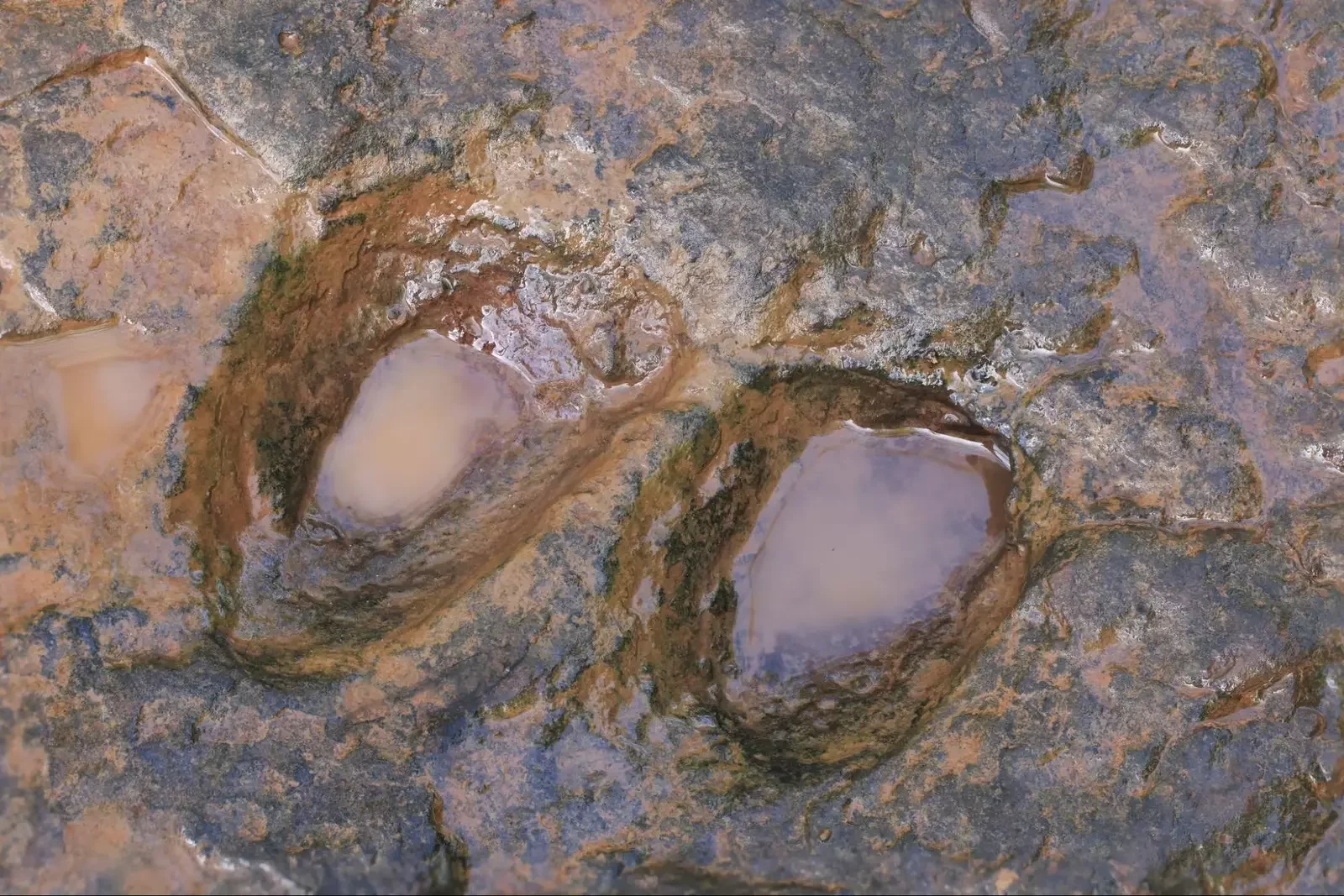
At Shar Tsav, scientists have documented over 13,600 perfectly preserved dinosaur footprints frozen forever in the stone. The Gobi wasn't always a dry land. Once an ocean, it later became a dinosaur paradise, featuring tall forests, rivers, vast inland lakes, and rich vegetation. Dinosaurs walked along the muddy shores of these prehistoric waters, leaving deep tracks behind.
But how did these delicate footprints survive intact for over 80 million years without being washed away by rain or eroded by wind?
The secret lies in ancient volcanoes. Nearby volcanic eruptions blanketed the entire landscape in a thick, heavy layer of fine volcanic ash. This ash acted like a wet seal, locking the footprints in place and shielding them from the elements. Over millions of years, the weight of the earth compressed the mud into hard stone, and the ash kept it safely buried. Only recently have the desert winds dusted off these protective layers, revealing these pristine, frozen moments of ancient life to the world.
Today, we can walk and look straight down at the footsteps of these ancient giants, giving us a rare, real-life window into how they moved and traveled in herds.
2. Stone Trees in the Sand, The Petrified Forest
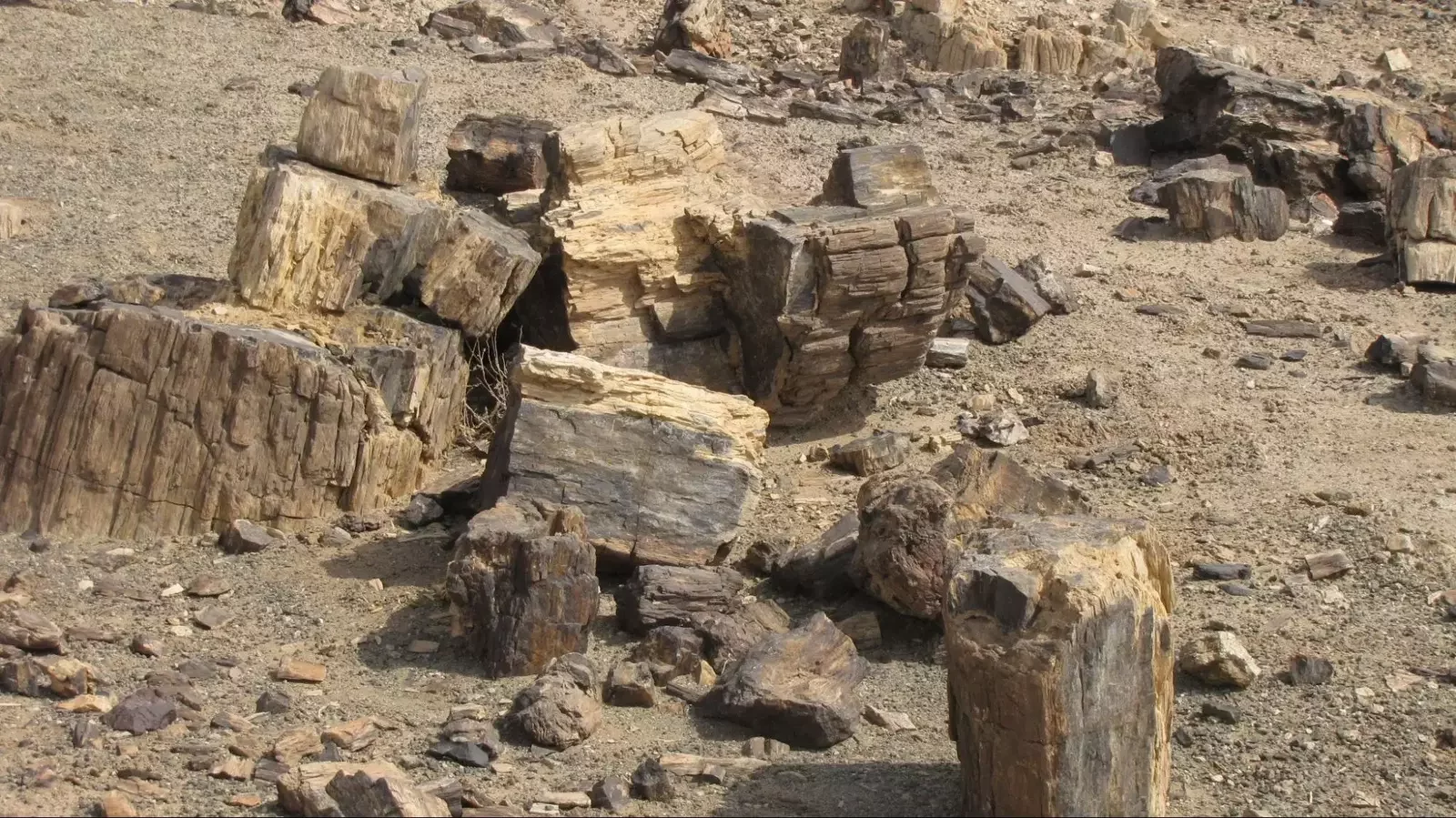
At this site, an entire ancient forest was completely turned to stone, creating a stunning natural monument. The very same volcanic ash that sealed the dinosaur tracks also buried these trees millions of years ago. As they lay compressed beneath the earth, mineral-rich groundwater flowed through the sediment. Over millennia, the organic wood fibers were slowly replaced, atom by atom, with silica (quartz crystal). Can you imagine the sky black with ash for years? It completely blanketed the forest, froze it in time, and preserved it for centuries. Today, the Gobi wind has eroded the surrounding sand, revealing highly detailed fossilized tree trunks across the clay soil.
3. The Energy Center at Demchig Monastery
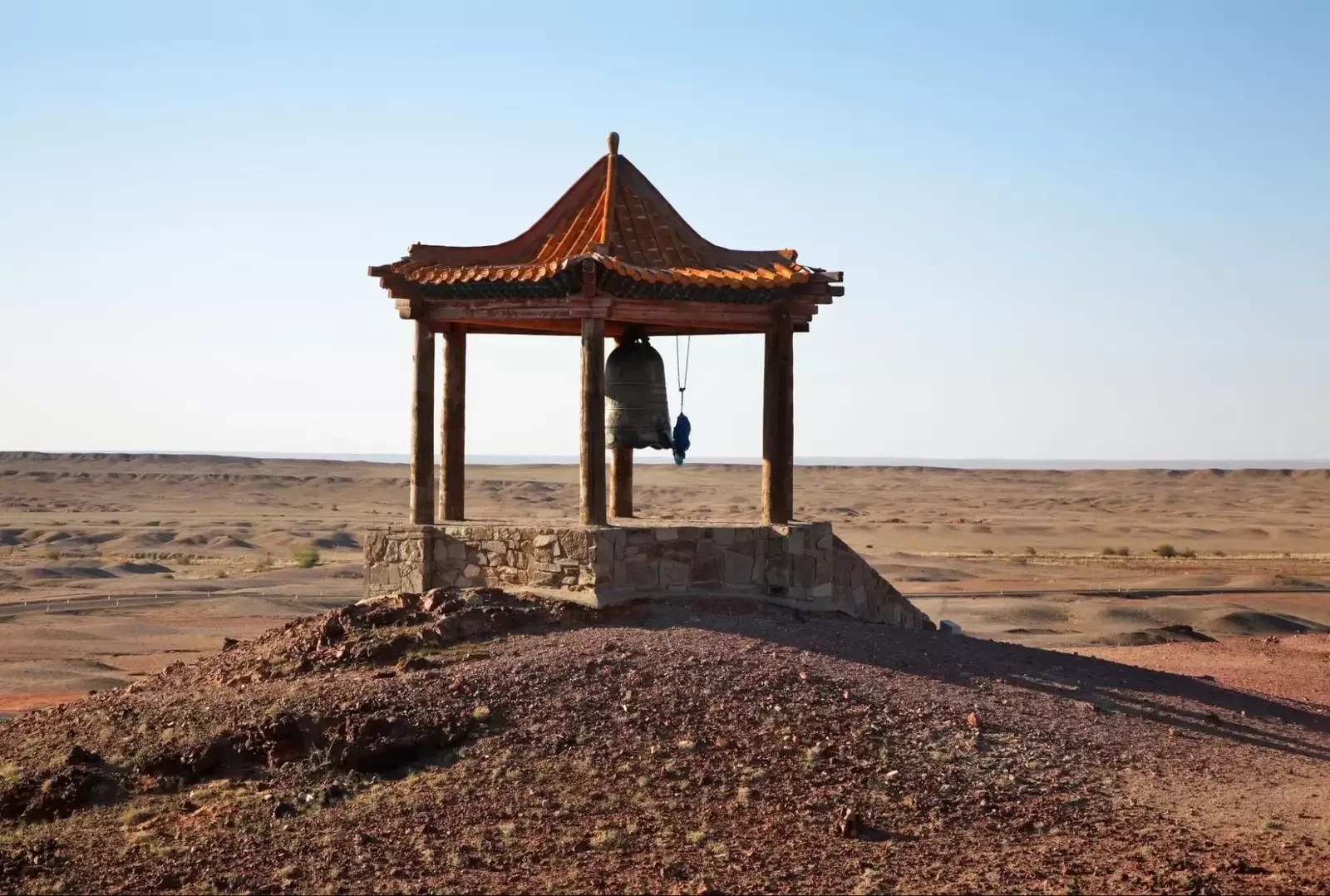
Geologists and those interested inmeditation travel are drawn to Demchig Monastery (Demchigiin Khiid), built over 200 years ago by one of the extraordinary figures in Mongolian history, poet, playwright, and "Saint Lord of the Gobi," Dulduityn Danzanravjaa.
Locals have long revered this spot as a powerful Energy Center. But how could people back then possibly know this area was teeming with energy without modern equipment to measure it?
Nomads are deeply in tune with the natural world. They observed the behavior of their herds, noticing where animals chose to rest, sleep, or avoid, and they physically felt the differences in the air, from the dry static charges to a deep, unshakeable sense of physical peace and mental clarity. Again, how did they know? They simply felt the land.
Today, modern science actually backs up what these ancient spiritual leaders felt!
The Science of the Energy Center. Demchig is built directly on the Khanbogd Massif, which is one of the largest alkaline granite plutons, formed 290 million years ago from a massive underground magma chamber. In plain English, this means this specific type of granite is highly enriched in crystalline minerals such as quartz.
Quartz is famously piezoelectric, meaning it naturally generates a subtle, measurable electric charge when put under physical pressure (such as the tectonic stress of the Earth's crust). This intense concentration of crystalline granite creates an anomaly in the local electromagnetic field, concentrating natural energy currents.
In spiritual circles, this is known as an Energy Vortex, a specific geographical spot where the Earth's natural electromagnetic field is highly concentrated and swirls upward. It is a deeply spiritual and ideal setting for Mongolian meditation. Visitor come to send their prayers to the one up there and recharge through spiritual healing meditation. And around here, locals will tell you with a smile that the vortex does have enough energy to deliver whispered wishes. The one up there listens, and the Gobi is full of quiet stories that came true.
How to Visit the Khanbogd–Shar Tsav Geopark
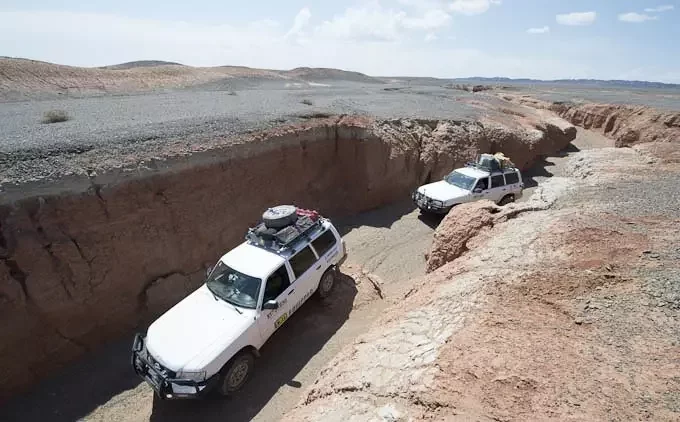
Because this geopark has only recently been officially established, its infrastructure is pristine, remote, and authentic, just as it was a millennium ago. It is not an easy drive-yourself destination. Reaching these hidden valleys safely and comfortably requires true local knowledge and specialized planning.
How do you experience all of this with a fine balance of comfort, safety, and fun? With Gobi Travel.
We keep our exact travel paths proprietary to ensure our guests enjoy crowd-free, exclusive access for a Gobi Desert tour Mongolia.
We handle all logistics for your Gobi overland journey or arrange a quick flight, letting you watch the grassy steppe transform into the mysterious, open plains of the semi-desert.
Guided by our local paleontology experts, we navigate the remote Gobi terrain to Shar Tsav, giving you exclusive access to walk alongside the fossilized tracks.
We venture deep into the granite formations of Khanbogd to camp near Demchig Monastery. Here, you'll experience the sunset over the energy center and spend the night in a traditional, highly comfortable partner ger camp.
We stand among the fossilized stone forest, a spectacular natural monument frozen in time.
Ready to Explore the Gobi's Wonder?
This is the perfect time to see the Khanbogd–Shar Tsav Geopark in its quietest, most pristine state before the rest of the world catches on.
Walk in the footsteps of dinosaurs, recharge your spirit at the world's energy center, sit with nomadic herders, and see if you can count all the stars away from light pollution.