Mongolia Travel Packages: Best Routes, What’s Included & What to Expect

So many destinations sit on our bucket list. If we had the luxury of unlimited time, we would visit them all, do everything, follow every road, and stay as long as curiosity allowed. 

But travel usually begins with a compromise. We choose a few places because time is limited. Then distance enters the equation. How far is one place from the next? How much of the day will be spent moving? Can the route be done comfortably, or are we trying to force too much into too little time?

In a small country or a well-developed city destination, this calculation is easier. Hotels can be booked online. Roads are marked. Trains, taxis, restaurants, and fuel stations are where we expect them to be. Logistics becomes manageable, and the only real question is how much appetite we have for the experience.

Mongolia is different.

There is an international airport in Ulaanbaatar. There are hotels. There are famous places you have read about and photographs that make you want to go immediately. But after that, the questions begin.

  • How far is Gobi from the capital?

  • Is there an express train?

  • Can the ger camp be booked online?

  • Is the road paved?

  • Where is the next fuel stop?

  • What happens if it rains?

  • Can we see the dunes, the cliffs, the horses, the lake, the mountains, and still have time to breathe?

We wish all this information were simple and readily available, so every traveler could arrange it independently. Some of it is available. Much of it is not. That is common in destinations that are still true to their core features, places that have not yet become another tourist railway station.

That is why Mongolia travel packages serve a real purpose.

They are not simply hotel bookings, transport, and sightseeing bundled together. In Mongolia, a good travel package is the structure that connects remote landscapes, local families, seasonal roads, activities, and time into a cohesive journey.

This guide explains the most interesting routes, what is usually included, and what travelers should expect when choosing tour packages Mongolia. If you have unlimited time, we encourage you to see it all. If you do not, the right route helps you choose the best combination for your time, interests, and appetite.

What a Mongolia Travel Package Really Means

Mongolia is large and sparsely populated. Once you leave Ulaanbaatar, the country opens quickly. There may be no fences, no signs, and sometimes no visible road in the way travelers from other countries understand a road.
But that openness is also the beauty.
Wherever you stop, the land is yours. Cook, camp, sleep. If you meet a family, you will be invited inside. You’ll be served tea and food, given rest, and, if you have time, allowed to rest overnight. Nothing is asked in return. This is the famous nomadic hospitality.
At the same time, practical questions matter.

  • Is the route on the map?
  • Are there road signs?
  • Where is the next fuel stop?
  • Will there be river crossings?
  • What happens if it rains?
  • Where do we restock food?
  • How far is the next family, camp, or settlement?
These questions can be part of the adventure. But they are more enjoyable when the essential details are already understood by people who know the land.

That is what a Mongolia travel package really means. 
A good package connects remote places, local people, seasonal roads, meals, vehicles, guides, and timing into a single route. It allows travelers to experience without being overwhelmed by its scale.

Best Routes for Mongolia Travel Packages

We selected five routes that show Mongolia’s diversity. Each one offers a different landscape, rhythm, and experience.
Depending on your available time, it is often possible to combine two routes, and sometimes three. The key is balance.

1. Gobi Desert Travel Package

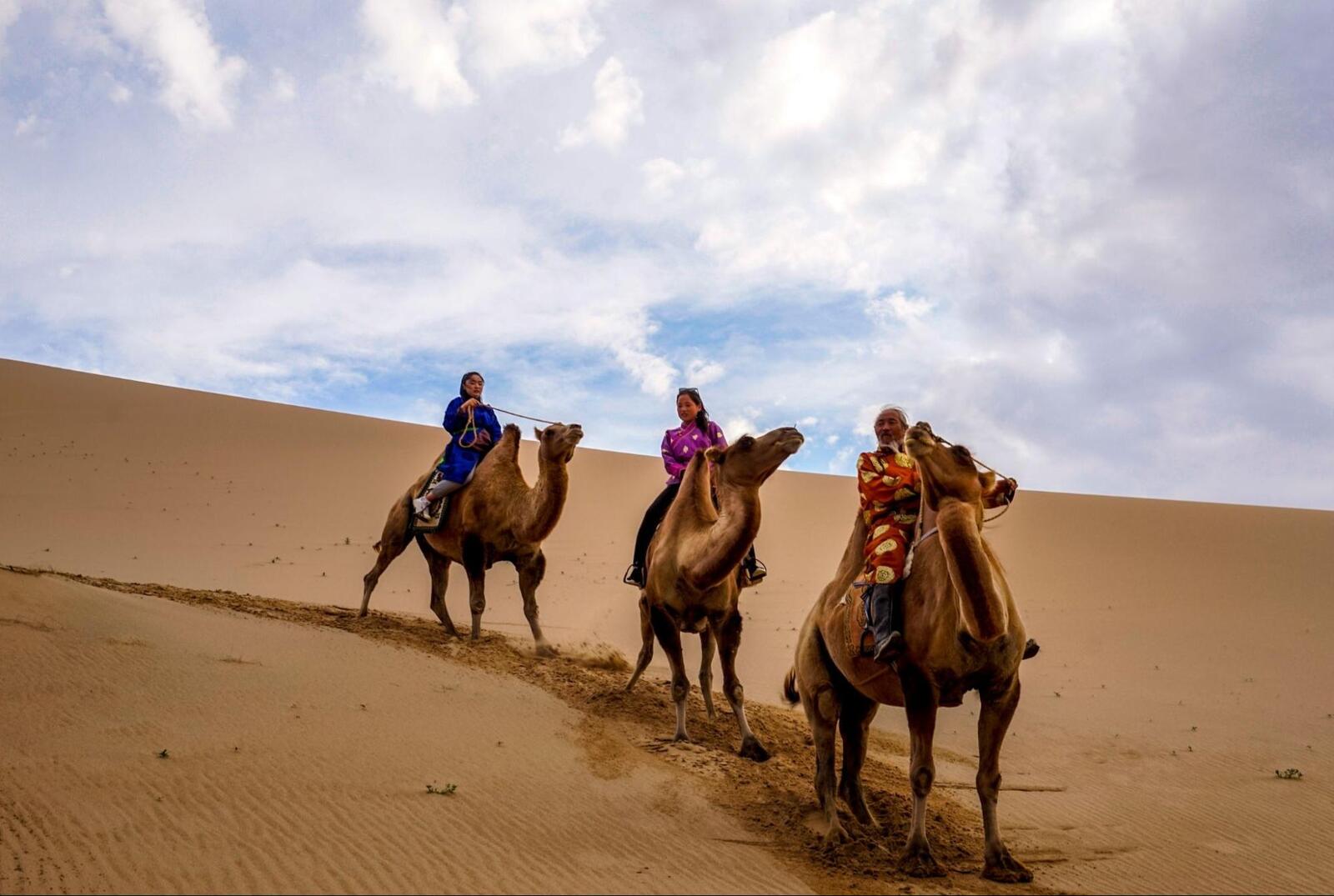
Gobi Desert camel ride with travelers crossing sand dunes under dramatic cloudy sky during Mongolia desert travel adventure.

The Gobi is not an empty desert. It is a living environment.
It has cliffs, canyons, dunes, mirages, rare wildlife, desert plants, nomadic families, livestock, and the two-humped Bactrian camels that belong so naturally to this landscape. Long before humans crossed it, Gobi was part of the ancient seafloor. Later, it became home to dinosaurs, whose fossils still make the region an important paleontological landscape.

The highlights: the mirage, the singing dunes, the Flaming Cliffs, dinosaur fossils, rare animals, big sky, and above all, the nomads who have learned not only to survive here, but to thrive.

A mirage appears when layers of hot and cooler air bend light near the ground. On a clear, unobstructed horizon, the distance begins to shimmer. Water seems to appear where there is none. The desert plays with perception.

The singing dunes are another wonder. When dry, clean grains of sand slide together in the right conditions, they create a deep humming vibration. It feels less like a sound made by sand, and more like the dune itself is breathing.

The Flaming Cliffs glow most intensely at sunrise and sunset, when low-angle light strikes the red and orange sandstone. The cliffs do not simply reflect color; they hold it. At the right hour, the whole formation seems lit from within. But the deepest part of the Gobi is nomadic life.

How do families live in this environment? How do they read the weather, move with animals, prepare for scarcity, and still produce milk, cheese, yogurt, and hospitality from such a landscape? The answer is not simple survival. It is knowledge refined over generations.

Camel milk, ingenii airag, is one of the special tastes of the Gobi. It is nutritious, distinctive, and deeply connected to camel-herding life. For many travelers, the memorable moment is not only standing at the dunes or cliffs, but sitting inside a ger and seeing how efficiently life is organized around daily milk, animals, weather, and movement.

2. Central Mongolia Travel Package

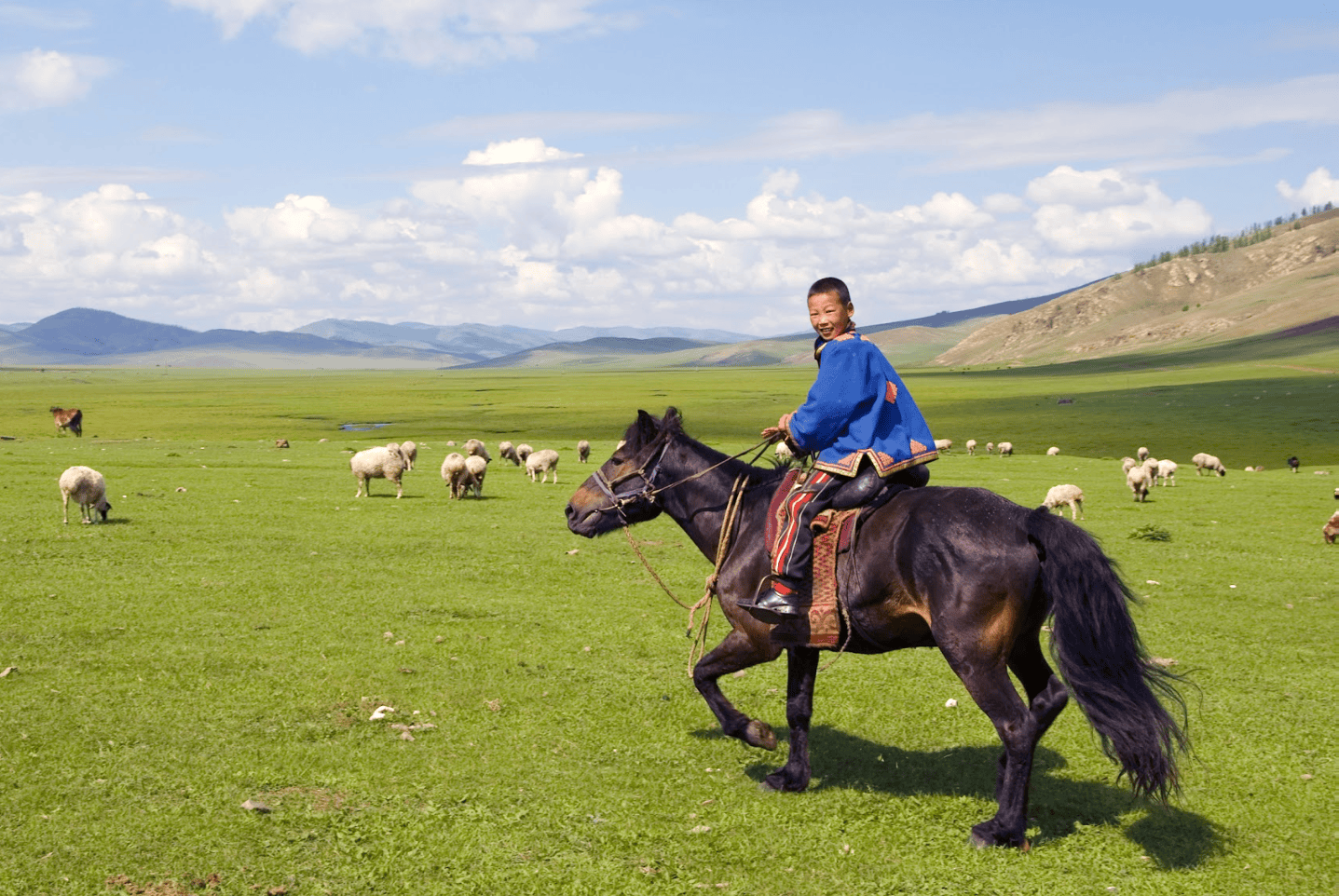
Central Mongolia horse riding adventure with nomadic grasslands, grazing sheep, and scenic mountain landscape in Mongolia.

Central Mongolia is one of the best introductions to the country because it balances culture, landscape, and accessibility.
Here, rivers and grasslands create a softer environment than the Gobi. Animals thrive more easily, and where there is more livestock, there is more milk, more dairy processing, more movement, and more occasions for gathering and celebration.

The daily dairy culture is fascinating. Fresh milk becomes butter, cheese, yogurt, dried curds, and even distilled milk wine. It’s all with one small stove inside a ger. In places without refrigerators, nothing is wasted, and nothing is allowed to spoil. What looks simple from the outside is actually a highly efficient food system built around freshness, timing, and experience.

Central Mongolia is also where travelers encounter Kharkhorin, the former capital of the Mongol Empire.

The popular image of the Mongol Empire often focuses on conquest. Without this exaggeration, the important part is Pax Mongolica, the Mongol Peace. It was a period when trade routes became more stable, religious tolerance was protected, and people, goods, and ideas moved across long distances with freedom and safety.

There is a famous saying from that era, a girl could travel from one end to the other with gold on her head and remain safe. Whether taken literally or symbolically, it expresses something important about the time's order, stability, and openness.

Kharkhorin was not only a political center. It was part of the Silk Road world, where traders, monks, craftsmen, and travelers crossed paths. The hospitality Mongolia is known for today has deep roots in the older culture of movement, welcome, and exchange.

3. Northern Mongolia and Khuvsgul Lake Travel Package
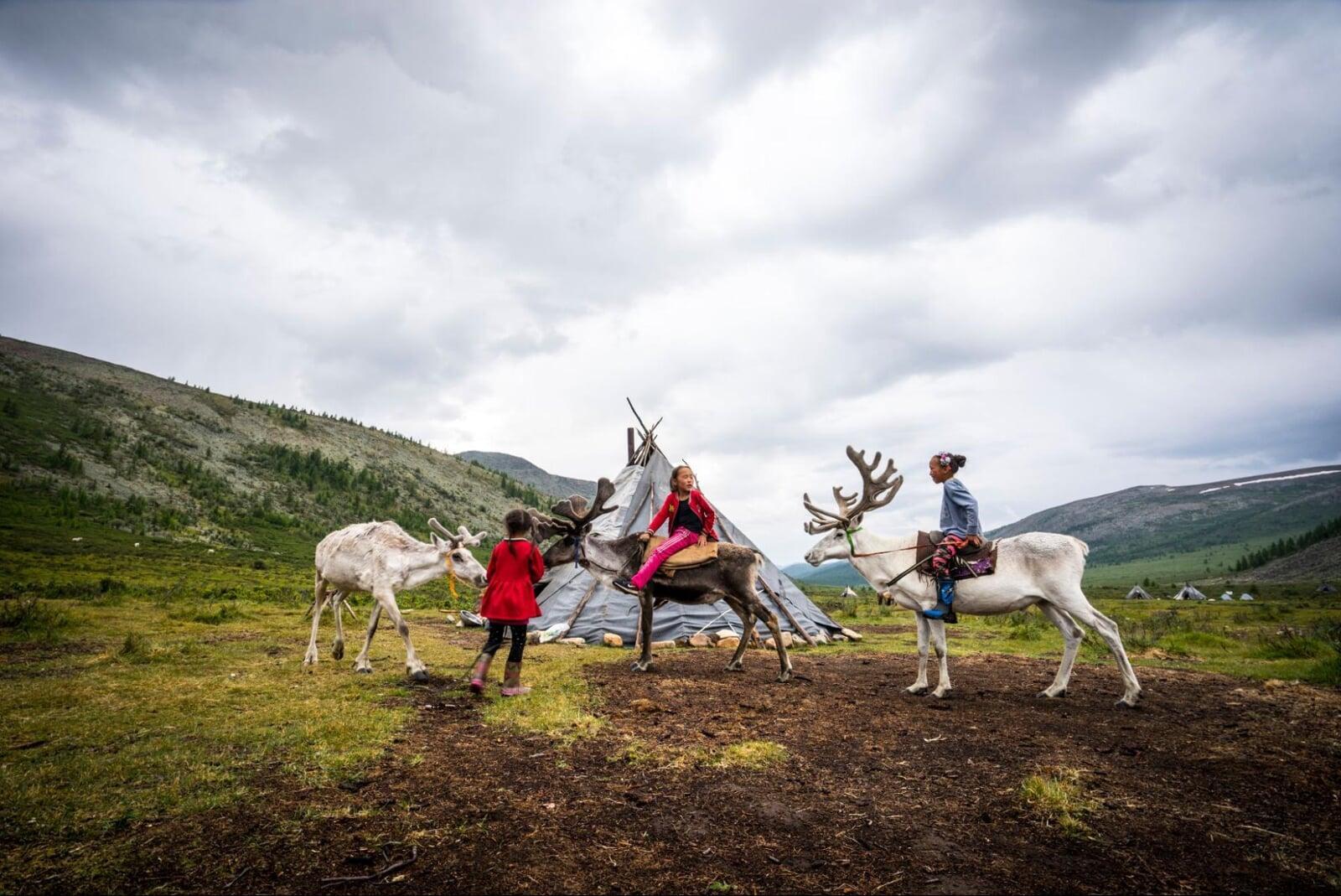
Northern Mongolia reindeer herders near Khuvsgul Lake with traditional teepee camp and dramatic mountain landscape.

Imagine kayaking on the Khuvsgul lake and scooping water with your mug and drinking it. The lake is that clean. The purity comes from remoteness, ancient geology, surrounding soil formations, and the absence of heavy human impact.
This route is not only about the lake. It can also include the wide Darkhad Valley, the Khoridol Saridag Mountains, the Sayan ranges, and the taiga landscapes farther north.

The most distinct cultural highlights is the Tsaatan, the reindeer people, who live in the taiga in teepees and continue a way of life shaped by reindeer, forest, migration, and isolation. Visiting this region requires more time and care, but it offers one of Mongolia’s most unusual human landscapes.

Northern Mongolia is best for travelers who want water, forest, mountains, and deeper experience rather than a fast route between famous sights.

4. Western Mongolia and Altai Travel Package
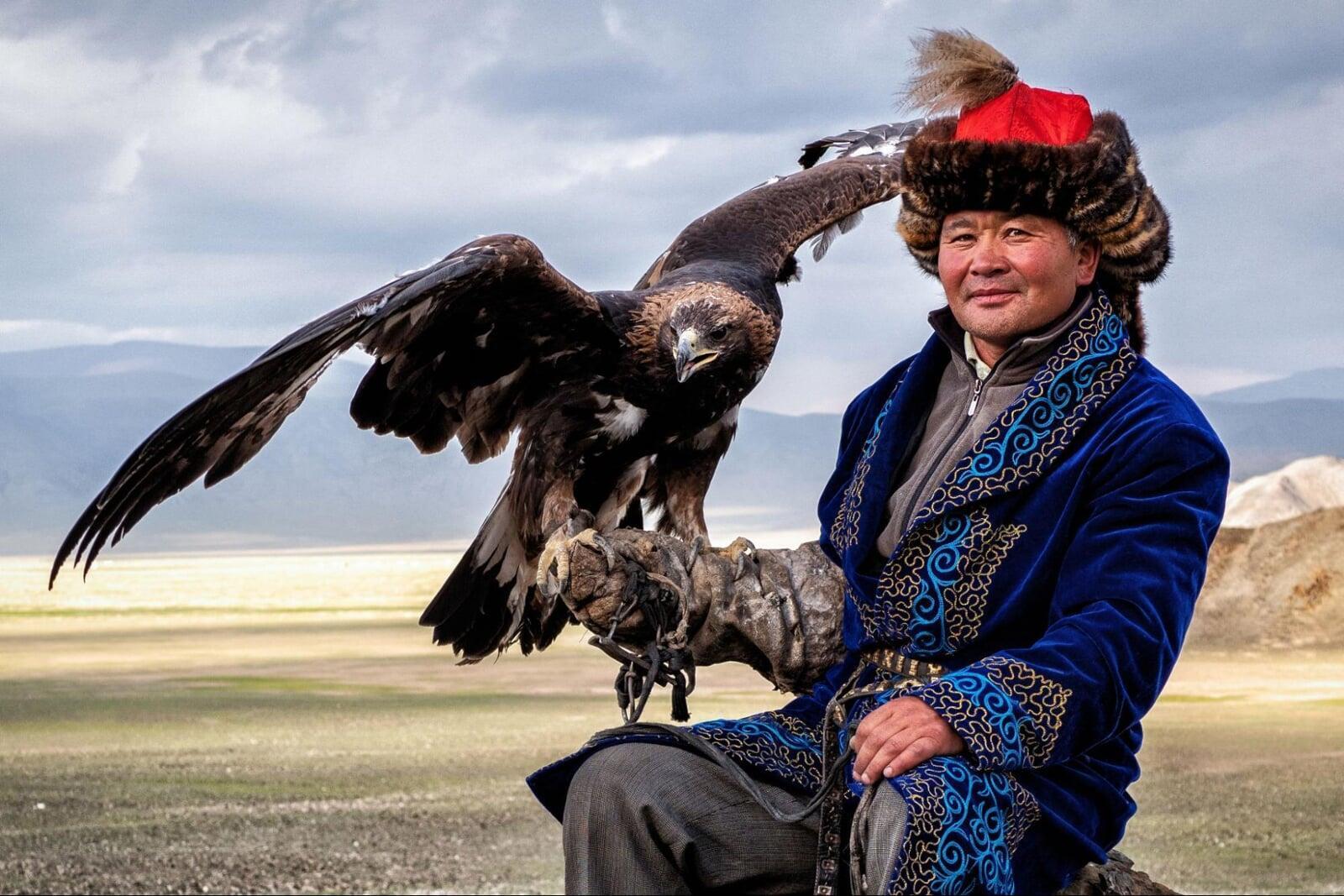
Western Mongolia eagle hunter in traditional Kazakh clothing holding a golden eagle in the Altai Mountains landscape.

Western Mongolia is a different world again.
Here, the land rises into the Altai Mountains, with high peaks, glaciers, and a stronger sense of remoteness. This region is home not only to Mongolian nomads and livestock herders, but also to Kazakh communities with their own language, food, music, and traditions.
The most famous of these traditions is hunting with golden eagles.

In the West, people often compare it to falconry, but this is not falconry in the usual sense. The bird is not a falcon. It is a golden eagle, chosen for its strength, endurance, eyesight, and ability to survive and hunt in high-mountain environments.

This knowledge once existed in many places. In most of the world, it faded as technology replaced the need for human-bird hunting partnerships. In Western Mongolia, the practice survived because families continued to pass it down.

Seeing an eagle hunter in the Altai is not just about watching a cultural performance. At its best, it reveals a relationship among human, animal, mountain, winter, and inherited skill.

5. Eastern Mongolia and Khentii Travel Package
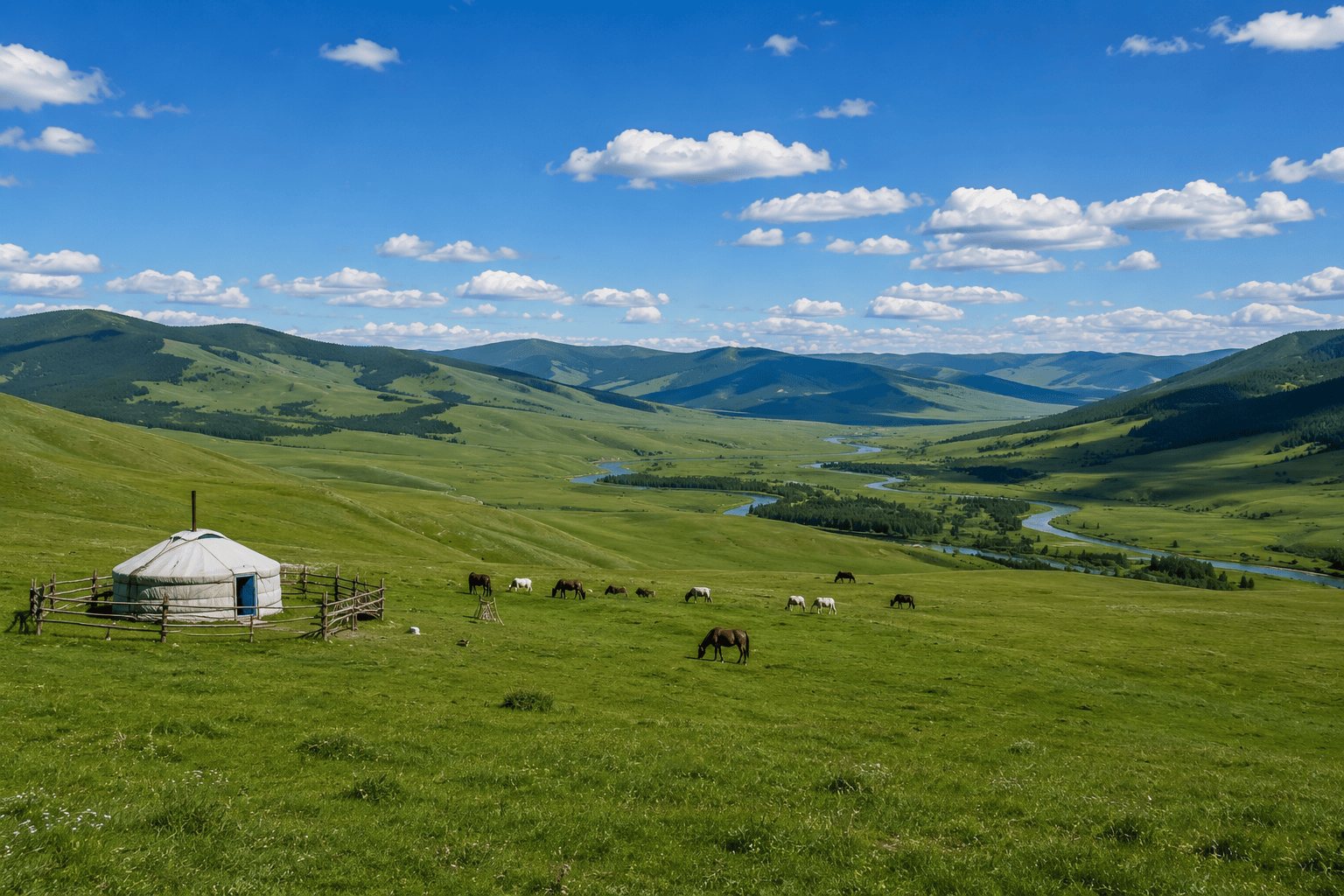
Eastern Mongolia and Khentii grassland landscape with traditional Mongolian ger, rolling hills, and scenic river valley.

Eastern Mongolia and Khentii are close enough to Ulaanbaatar to be accessible, yet still wild.
Because of the region’s historical and spiritual significance, much of the nature has remained intact. Khentii is associated with the birthplace of Chinggis Khan and, according to tradition, his final resting place. That history gives the landscape a quiet gravity.

The region combines mountains, forests, grasslands, rivers, and mountain lakes. Because it requires less travel time than the Gobi or the far west, it is a strong option for visitors with limited days who still want countryside, horseback riding, trekking, and various landscapes.
For travelers who want a quieter, less commercial route, Khentii can be one of the most meaningful choices.

What’s Included in a Mongolia Travel Package?

The details vary by route, season, comfort level, and travel style. But most Mongolia travel packages include the essential support needed for remote travel.

A typical overland package includes:

  • Private 4x4 vehicle or minivan transportation
  • Experienced local driver
  • English-speaking guide
  • Accommodation in hotels, ger camps, family stays, or tents
  • Meals during the countryside portion of the journey
  • Airport transfers
  • National park or entrance fees
  • Cultural activities and local visits
  • Domestic flights for distant regions, when needed
  • Route planning and itinerary coordination
Some packages may also include camel riding, horseback riding, trekking support, camping equipment, festival tickets, or special activities, depending on the journey.


Expedition-style trips include a full support crew, especially for remote trekking, camping, horse expeditions, or Altai routes.

A good operator should make all inclusions clear before the trip begins. But the real value is not only the list. It is the coordination behind the list, backed by experience and expertise.

What to Expect When Traveling in Mongolia

Mongolia can be comfortable, but it is rarely predictable in the ordinary sense.

The country is vast, and many of its beautiful places are far from paved roads. But the road is not only the space between destinations. It is part of the journey, horses, yaks, camels, nomads, sudden weather, clean drinking water from rivers you cross, and the feeling of land opening in every direction.

Expect unpaved roads. Travel can be bumpy, slow, dusty, or muddy depending on the season. This is why a skilled local driver matters.

Expect simple accommodation outside the city. Ger camps can be warm, atmospheric, and memorable, but facilities vary by region. Family stays are more personal and may be more basic. In remote areas, comfort often comes from hospitality rather than luxury.

Expect changing weather. Even in summer, mornings and evenings can be cool. In the Gobi, the day may be hot and the night chilly. Layers are essential.

Expect limited internet. In many remote areas, the signal is weak or unavailable. At first, some travelers find this inconvenient. Later, many describe it as one of the journey's gifts.

Most of all, expect flexibility. Mongolia does not always reward tight schedules. Weather, roads, animals, local events, or family visits may change the day. A good itinerary leaves room for this.

How to Choose the Right Mongolia Travel Package

The best Mongolia travel package is not always the longest, most expensive, or most famous one. It is the one that fits your time, interests, comfort level, and travel style.

If this is your first visit, the Gobi Desert or Central Mongolia are usually the best starting points. They offer a strong mix of landscapes, culture, history, and classic Mongolia experiences.


If you want adventure, consider Western Mongolia, the Altai Mountains, trekking routes, or longer overland journeys.

If you are traveling with family, choose a route with a balanced pace, comfortable ger camps, and fewer long driving days.

If you want horseback riding, Central Mongolia, Khentii, and selected steppe routes are strong choices.

If photography is your focus, the Gobi Desert, Altai Mountains, Khuvsgul Lake, and eagle festival season offer powerful visual opportunities.

If culture matters most, look for routes that include family stays, monastery visits, encounters with eagle hunters, local festivals, or time with nomadic households.

  • The question is not only: Where should I go?
  • It is also: How do I want to feel while traveling?
  • Fast and full? Slow and meaningful? Comfortable and scenic? Remote and adventurous?
Mongolia can offer all of these, but rarely all in the same route. Choosing well means understanding your own appetite before choosing the road.

How Many Days Do You Need for Mongolia Travel?

You can visit Mongolia in a few days, but the country opens more fully with time.

For most travelers, 5 to 7 days is enough for a short trip to the Gobi Desert or Central Mongolia. 8 to 10 days is a strong first-time travel package for Mongolia, especially if you want a balanced route without feeling rushed.

With 11 to 14 days, you can travel more slowly or combine regions, such as the Gobi Desert with Central Mongolia, or Khuvsgul Lake with cultural routes. For 15 days or more, Western Mongolia, the Altai Mountains, remote expeditions, and deeper multi-region journeys become more realistic.

Because distances are long, trying to see too much in too little time can weaken the experience. In Mongolia, a slower route often gives you more than a crowded itinerary.

Plan Your Mongolia Trip with Gobi Travel

No two travelers are the same. Some arrive with a clear bucket list. Some know only that they want space, horses, desert, mountains, or nomadic culture. Some want comfort. Others want an expedition.
We help match those interests with the realities of Mongolia: distance, season, road conditions, comfort level, safety, and timing.
Across all the routes described above, one thing remains constant: people. Again, nomadic hospitality is not an added activity. It is part of the living culture. Imagine stopping by a family ger and being offered tea, food, rest, and a place to sleep, with nothing demanded in return.

That is hospitality. A good Mongolia travel package should protect that spirit. It should make the journey smoother without making it artificial. It should help you reach the places you came to see, while leaving enough room for the moments you could not have planned.

FAQs About Mongolia Travel Packages

Most Mongolia travel packages include transportation, driver, guide, accommodation, meals during the countryside portion of the trip, airport transfers, and route planning. Depending on the itinerary, domestic flights, entrance fees, horse riding, camel riding, trekking support, or festival tickets may also be included.

For first-time visitors, the Gobi Desert and Central Mongolia are usually the best choices. They offer a strong mix of landscapes, nomadic culture, history, and classic Mongolia travel experiences without requiring the deepest level of expedition travel.

For a meaningful first trip, 8 to 10 days is a good starting point. Shorter trips are possible, but longer journeys allow a slower pace, more remote routes, and a better sense of Mongolia’s scale.

Expect long drives, many unpaved roads, and simple but memorable countryside accommodation. Ger camps, family stays, and camping are part of the travel experience in Mongolia. Facilities vary by region, especially in remote areas.

Yes. Mongolia is ideal for custom travel because routes can be shaped around your interests, including horseback riding, photography, culture, festivals, desert landscapes, mountain expeditions, family travel, or slower nomadic experiences.